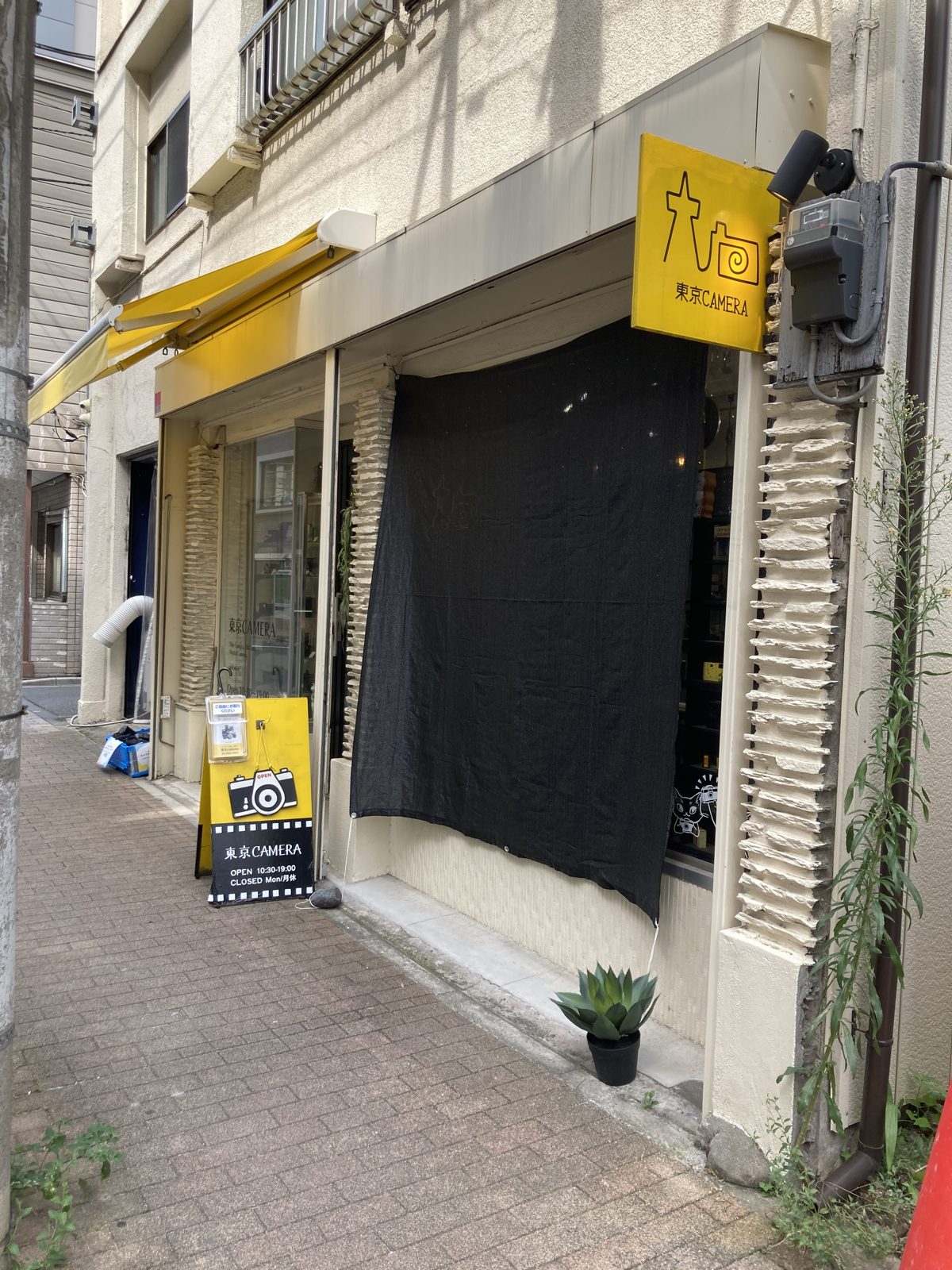
On August 1, 2026, I walked around Akihabara and went into seven camera shops in one day. Not a single member of staff spoke to me.
Nobody asked what I was looking for. Nobody came over while I was standing at a shelf. I looked at cameras for hours and had zero conversations.
I want to be careful about what I claim here. That is one person, one day, seven shops. It is not a rule about Japan, and it is not a description of how Japanese shops work in general. In a clothes shop I get approached almost immediately — “what are you looking for today?” is completely normal there. So the quiet I experienced may be something about used camera shops specifically, or about those seven shops, or about that particular day. I cannot tell you which. I have not asked anyone in the industry, and I would rather say I do not know than invent an explanation.
But I do think it is worth writing down, for one reason: if you fly to Tokyo, walk into a used camera shop, and nobody comes to help you, you might read that as being ignored. Based on what I saw, I do not think that is what is happening. The shop is simply letting you look. When you want something, you go to them.
What this means in practice
Almost everything you want to do in a used camera shop requires you to start the conversation.
The stock is usually behind glass. The cameras you actually want to hold are in a locked case, and the case does not open until you ask. So the sequence tends to be:
- You browse on your own, for as long as you like. Nobody will hurry you.
- You read the price tag — this is the step people skip, and it carries most of the information about the item. I wrote up how to read a Japanese camera shop price tag separately, and I would read that before you go.
- When you have decided you want a closer look, you go and get a member of staff.
Step three is the one that feels hardest if you do not speak Japanese. It is also the shortest. You need about six phrases, and one of them matters more than the rest.
Start with “Ano… sumimasen”
This is the part I would underline if I could only tell you one thing.
あの〜すみません — Ano… sumimasen
Roughly: “Um… excuse me.”
Do not walk up and lead with your request. Open with this, wait a beat for the person to turn towards you, and then say what you want. Sumimasen is close to English “excuse me,” but in Japan it is used very widely as the way into a conversation — it is how you get someone’s attention before you take up their time. The ano in front of it softens it further.
This is how I do it myself, every time. If you learn nothing else from this article, learn these two words. They will carry you further than perfect grammar on the sentence that follows.
The phrases I actually use
These are the ones I use when I am buying, in the order they usually come up. The romaji is there so you can say them out loud; you can also just show the Japanese on your phone screen, which works perfectly well.
To see an item
| Japanese | Romaji | English | When to use it |
|---|---|---|---|
| これを見せてもらえますか? | Kore o misete moraemasu ka? | Could I see this one? | The main one. Point at the item in the case as you say it. This is what opens the glass. |
| これ欲しいんですけど | Kore hoshii n desu kedo | I’d like this one. | Once you have decided to buy. Softer and more natural than a flat “I’ll take it.” |
| 他に在庫ありますか? | Hoka ni zaiko arimasu ka? | Do you have any others in stock? | When you want to know whether there is another one — a different body, another copy of the same lens. |
At the register
| Japanese | Romaji | English | When to use it |
|---|---|---|---|
| カード使えますか? | Kaado tsukaemasu ka? | Can I use a card? | Ask before you commit, especially in smaller shops. |
| タッチ決済はできますか? | Tacchi kessai wa dekimasu ka? | Can I pay by contactless? | Tap-to-pay is not available everywhere, and it is a separate question from whether cards are accepted at all. |
| カードでお願いします | Kaado de onegai shimasu | Card, please. | When they ask how you are paying. |
| 袋は大丈夫です | Fukuro wa daijoubu desu | I don’t need a bag, thanks. | Declining a bag. Daijoubu desu is the normal, polite way to say “no thank you” here. |
One phrase you will probably not need
There is a phrase I use constantly when I am buying clothes or household things:
色違いはありますか? — Iro-chigai wa arimasu ka? — “Do you have it in another colour?”
In a used camera shop, it almost never applies. Used stock is one-of-one. The camera in that case is that camera, with that serial number, that shutter count, that scuff on the baseplate and that price. There is no other colour in the back, and usually no other copy at all.
I mention it because it is a useful thing to internalise before you travel. If you see a used body you want and you leave to think about it over lunch, it may genuinely be gone. That is not sales pressure — nobody is going to apply any, since nobody is going to talk to you — it is just how single-item stock works. It also explains why the tag on that specific item matters so much.
If your Japanese runs out
It will, and that is fine. Point at the item. Show the Japanese text on your phone. Use a translation app. In the shops I have been in, staff are used to sorting things out without a shared language, and the transaction itself — glass case, item, register — does not need many words.
What varies is how much English a given shop can handle, and that is shop by shop rather than area by area. I covered what I saw in my Akihabara shop guide, which is the same day I am describing here.
What I am not going to tell you
A few things I have no basis to write about, so I will not.
I have never asked to test a camera in a shop in Japan, because — as this whole article says — I have not had a conversation with staff on the shop floor. So I cannot tell you the phrasing for that, or what the shop’s answer would be. I also cannot tell you how staff treat visiting customers, because I have never worked behind that counter and I am not going to guess at what someone else is thinking.
And I am not going to guess at why nobody approached me. I only know that they did not.
The short version
Silence in a Japanese camera shop is not a message. Browse as long as you like, read the tags carefully, and when you want the case opened, go and open the conversation yourself with ano… sumimasen. The rest is six short phrases and a pointing finger.
Two more things worth reading before you go: basic etiquette in Japanese camera shops, and — if you are heading for the cheap bins where the rules are different — how to buy junk cameras in Japan.

コメント