
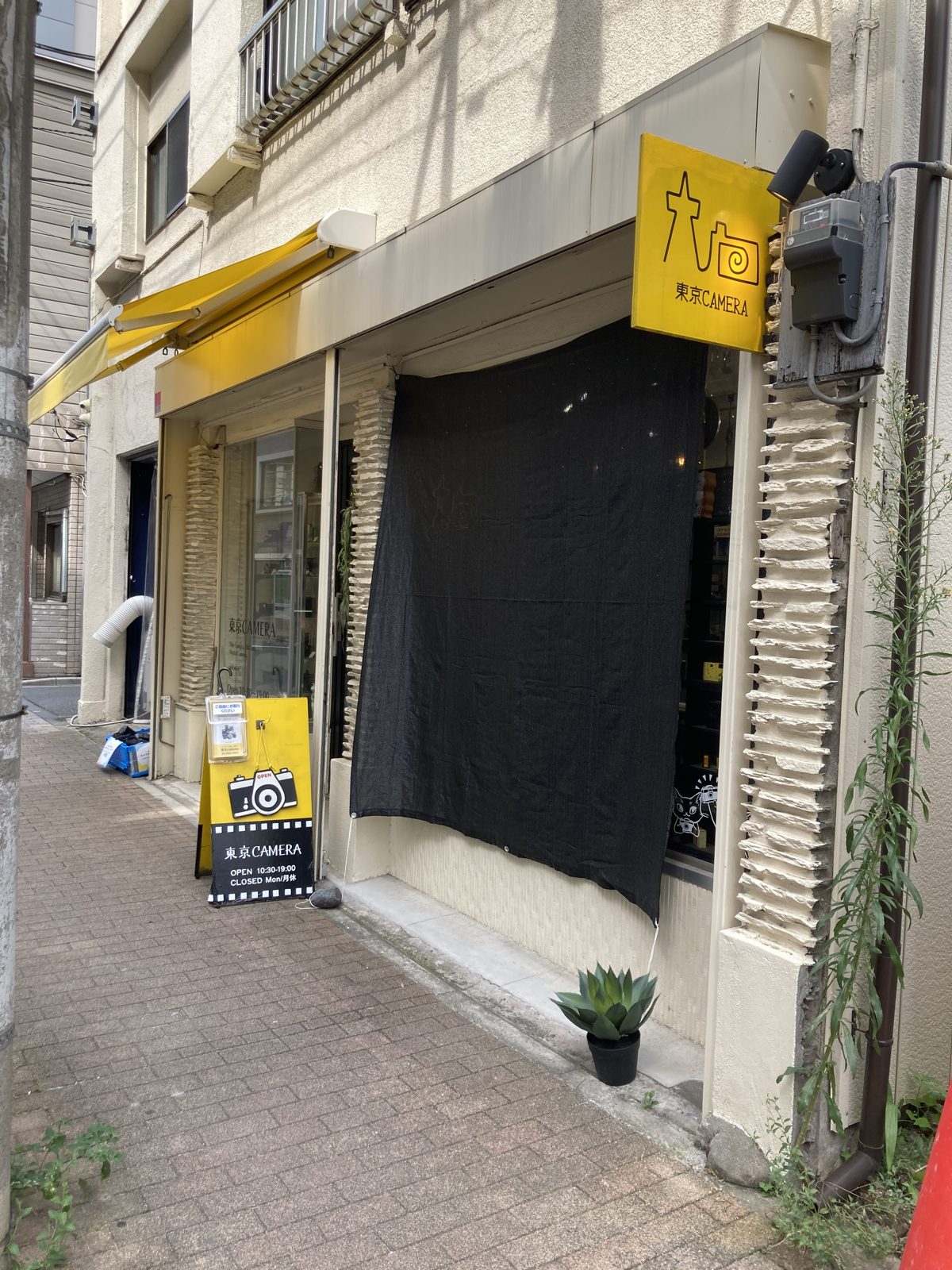
Akihabara has several used camera shops, but one of them stayed in my head for days after I went home: Tokyo CAMERA, a small film and vintage camera shop, and the “Junk Garage” standing right next to it.
I walked the whole Akihabara camera route on August 1, 2026, and wrote it up in my Akihabara camera shop guide. Tokyo CAMERA got one section there. It deserves its own article, because the garage next door is not like any camera shop I can point you to anywhere else.
What Tokyo CAMERA is
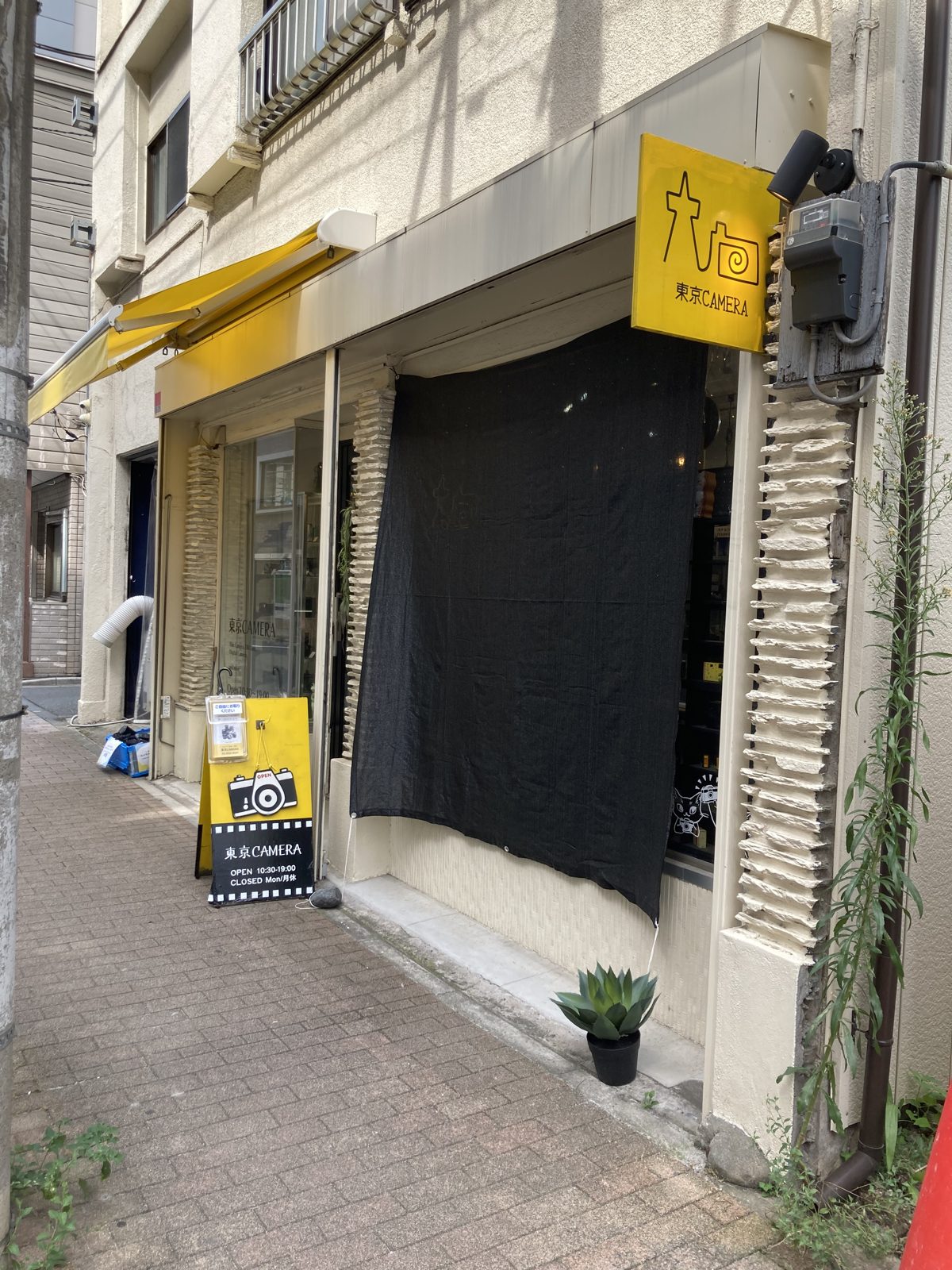
Tokyo CAMERA is a small shop in Akihabara specializing in film cameras and old lenses. The yellow awning with the camera logo makes it easy to spot from the street, which matters, because a lot of Akihabara shops hide on the 3rd or 4th floor of an office building.
The main shop is worth a look on its own. But the reason I am writing this article is the building beside it.
The Junk Garage: a shop with nobody in it
Next to the main shop is a warehouse-like space with a vinyl curtain instead of a door. Inside there is no staff at all — the staff are next door in the main shop — just gear, price stickers, and a security camera.
There are no condition labels on anything. Not “AB”, not “for parts”, not a single grade. Prices are simply stuck onto the equipment. When I visited, lenses started around 3,000 yen, with plenty sitting at 5,000 yen.
And then there is the sign. It is written in English too, and it says you are free to check the condition yourself: mounting lenses is OK, putting batteries in is OK.
Think about what that means. In most used camera shops — in Japan and everywhere else — the gear is behind glass and you ask a staff member to hand it to you. Here, the shop hands you the whole room and trusts you to do the inspecting. That is why I called it the highlight of my Akihabara day in my one-day Akihabara itinerary.
Be clear about what you are buying
Junk in Japan means untested, as-is, no guarantee. Most of the items in the garage are in rough shape. That is the deal, and the low prices are the other half of it. Nothing is graded, so what you find is what you get, and nobody is going to tell you whether that lens has fungus. You are the inspector.
Which is exactly why this is a good place to practice. If you have read about Japanese junk culture but never had a chance to actually handle the stuff, the garage gives you permission that most shops do not. My article on buying junk cameras in Japan covers what to check — aperture blades, fungus, haze, focus feel — and this is a room where you can run through that list with the shop’s blessing.
One practical thing: bring a camera body you can mount lenses on. Permission to test is only useful if you have something to test with. A body with a common mount, or a cheap mount adapter, turns a pile of unlabeled lenses into something you can actually judge.
It is not a tourist attraction
While I was there, a foreigner who looked like a local resident wandered in and browsed casually — the way you would check a neighborhood bookshop on your way home. No camera around his neck, no map, no hurry.
That detail stayed with me. The garage is not a show put on for visitors. It is a working shop that happens to run on trust, and it is simply part of the neighborhood. As a visitor, you are welcome to use it the same way.
Getting there
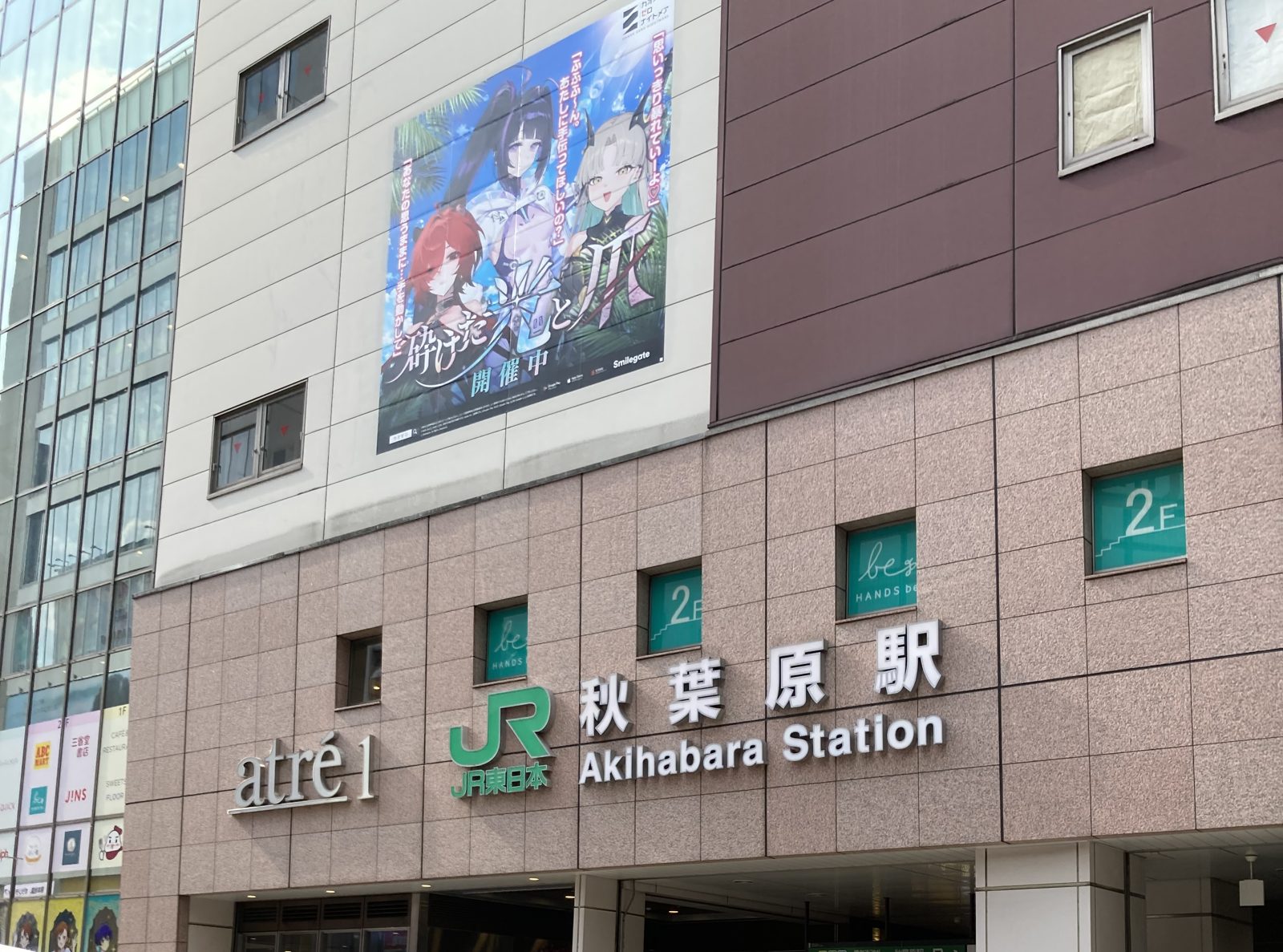
Akihabara Station is on the JR Yamanote Line, so it is easy to reach from anywhere in central Tokyo, and the camera shops sit within about a ten-minute walk of the station. On my day I reached Tokyo CAMERA in the afternoon, after Kitamura’s used floor, and gave it about an hour. The full itinerary is here if you want the whole route with lunch and rest stops built in.
Some things I do not know, so I will not guess: I did not confirm Tokyo CAMERA’s opening hours, and I did not confirm whether they do tax-free shopping or take credit cards. Please check the shop’s official information before you go, and carry some cash — for junk-priced items, cash is the safe assumption.
One more warning about my visit day: it was 37°C (99°F). If you come in summer, water and air-conditioned breaks are part of the plan, not a luxury.
Who this shop is for
If you want clean, graded, guaranteed gear, this is not your shop — go somewhere with condition ranks on the tags, and read my guide to Japanese camera condition grades before you do.
But if the treasure-hunt side of used cameras is what you enjoy — digging through unlabeled gear, testing it yourself, taking the risk knowingly for 3,000 yen — Tokyo CAMERA’s Junk Garage is the most direct version of that I found in Akihabara. Bring a body, bring patience, and give it an hour.
Everything above is what I saw with my own eyes on August 1, 2026. Prices, stock and shop rules change, so please check before you go — and if you pull something great out of that garage, I would love to hear about it.
コメント