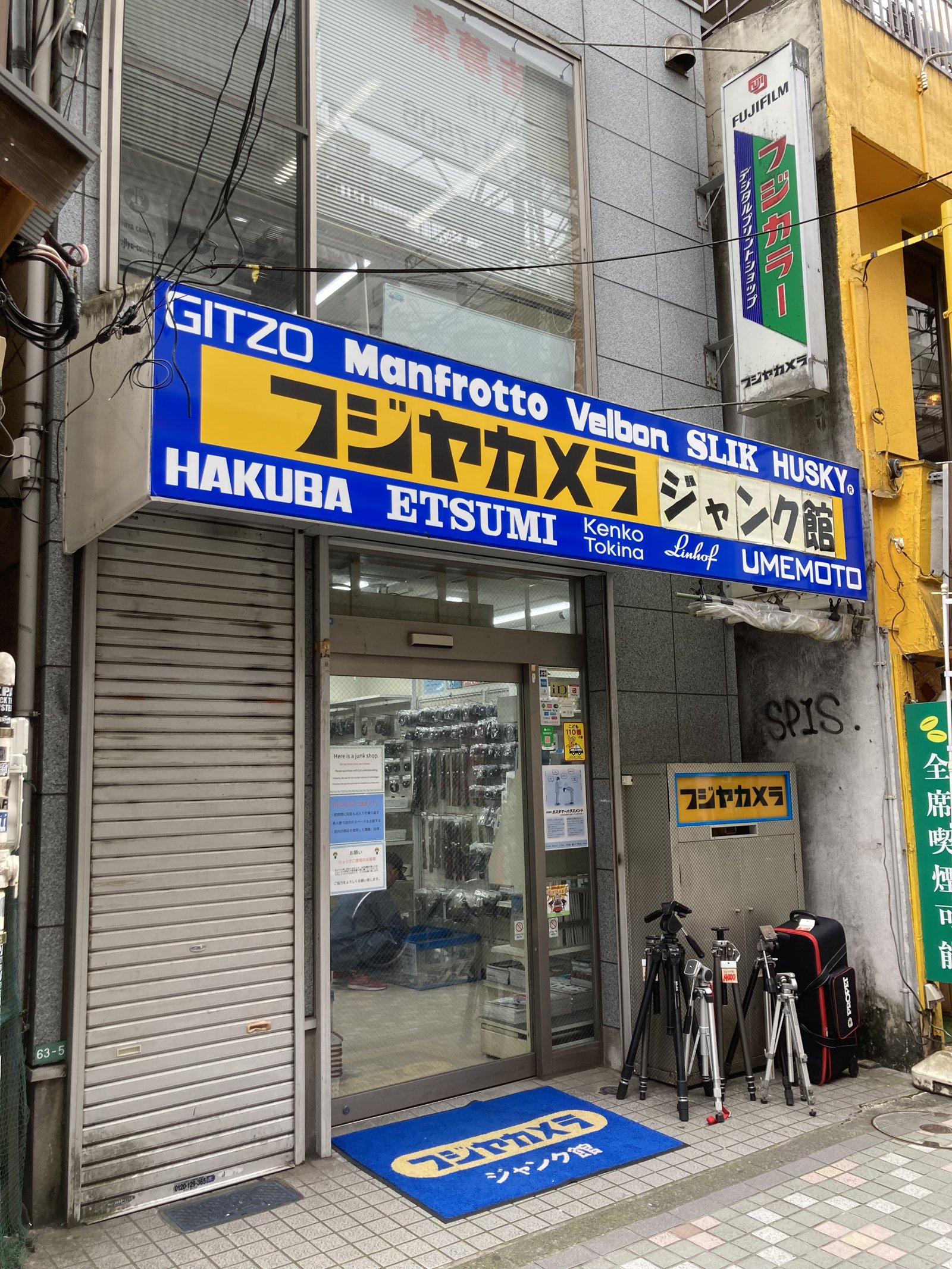
Over the past weeks I wrote about three Tokyo camera shops — Fujiya Camera’s junk annex in Nakano, Lemon Company in Shinjuku, and Map Camera in Shinjuku. While visiting them, I kept thinking about the same three worries that many foreign visitors seem to carry into a Japanese camera shop:
- “Will anyone understand me if I don’t speak Japanese?”
- “What if I do something rude without knowing it?”
- “Everything is behind glass — how am I even supposed to look at it?”
So this article is the practical summary of the series: not about one shop, but about how to behave in any Japanese camera shop, so you can relax and enjoy it. My main message up front: you don’t need to be nervous. These shops see foreign visitors every day, the unwritten rules are simple, and nobody expects you to be perfect.
Worry 1: “I don’t speak Japanese”
Here is the honest truth from my visits: you don’t need much Japanese at all. At all three shops I visited, pointing and simple gestures worked fine, and I saw other foreign visitors shopping without any trouble. At Lemon Company I even watched a staff member handle a whole buy-back conversation with a foreign customer in English.
A few short English phrases cover almost everything:
- “Can I see this one?” (while pointing at the showcase)
- “Can I hold it?”
- “How much is this?” (or just point at the price tag)
- “Do you accept tax-free?” / “Do you take credit cards?”
- “Just looking, thank you.”
Speak slowly, keep it short, and smile. Staff English levels vary from shop to shop and person to person, but camera vocabulary is international — “Nikon”, “50mm”, “shutter” mean the same thing everywhere.
Worry 2: “What if I’m rude without knowing it?”
Japanese shop service is famously polite. At Map Camera, I watched staff members stop on the stairs, bow, and say “irasshaimase” (welcome) every time they passed a customer. Seeing that level of politeness can make a visitor think, “The bar must be incredibly high for me too.”
It isn’t. “Irasshaimase” doesn’t require any reply — a small nod or smile is plenty, or nothing at all. Nobody is grading you. The real etiquette comes down to a few simple, common-sense habits:
- Ask before touching items behind glass (more on this below).
- Handle gear gently and with both hands when a staff member passes it to you.
- Put big bags where the shop wants them. Some small shops have a rack for large backpacks — at Fujiya’s junk annex, there is one in the middle of the room, with a handwritten notice. The aisles are narrow, and browsing with a backpack on can bump shelves and other customers. If you see a rack, use it.
- Go easy with photos inside the shop. I’ll be straight with you: I don’t photograph the inside of shops myself, and I recommend the same default — don’t shoot inside unless you’ve asked and gotten an OK. Photos of the outside, taken from the public street, are fine (that’s what I do for this blog).
That’s really it. If you do those four things, you are already behaving better than plenty of customers.
Worry 3: “Everything is in a showcase — how do I look at it?”
This is the biggest difference from many Western used-camera stores. In Japan, most of the good stuff lives inside glass showcases, and the system is: you ask, and a staff member takes it out for you. All three shops I visited worked this way. It can feel like a barrier at first, but it’s actually the normal, expected flow — asking is not an imposition, it’s how the shop is designed to work.
How it goes in practice: catch a staff member’s eye, point at the item, and say “Can I see this one?” — or just point. That’s enough. Even on a busy day at Fujiya, pointing worked fine.
Now, one honest note. Whether you can then hold the item freely and try everything yourself — I can’t promise you, because I haven’t confirmed the exact rules at every shop, and I suspect they vary by shop, by item, and by price. Sometimes the staff member may hold it while showing you. So here is my practical advice: just ask “Can I hold it?” It’s a completely normal question, nobody will be offended, and the answer will be clear either way. When in doubt, ask — that one habit solves almost every showcase situation.
One layout tip if you’re the nervous type: shops where the staff area is at the back (like Lemon Company and Map Camera) tend to feel more relaxed for slow browsing, because nobody is standing in the middle of the room. In shops where staff are stationed centrally, you might feel watched — that’s just what the layout does to your nerves, not anyone actually watching you. If you want a gentle first experience, start with a back-counter shop.
The junk corner: different rules, more freedom

Junk corners are the opposite of showcases: here, touching is usually the whole point. At Lemon Company, junk items sit on open shelves like books, and you pick them up and inspect them freely. Fujiya’s junk annex works with open plastic boxes too — though it’s popular and can get crowded, so you may need patience to get close.
Two things to remember:
- “Junk” means as-is. Untested, no guarantees, no returns. Fujiya even says it in English on the door. Inspect carefully with your own eyes and hands — that’s exactly what the open shelves are for.
- Be gentle and put things back where they were. Freedom to touch comes with the small responsibility of not leaving chaos behind.
If junk hunting sounds fun, I wrote a whole article about Fujiya’s annex and covered Lemon’s junk shelves too.
Tax-free shopping: one rule you must know
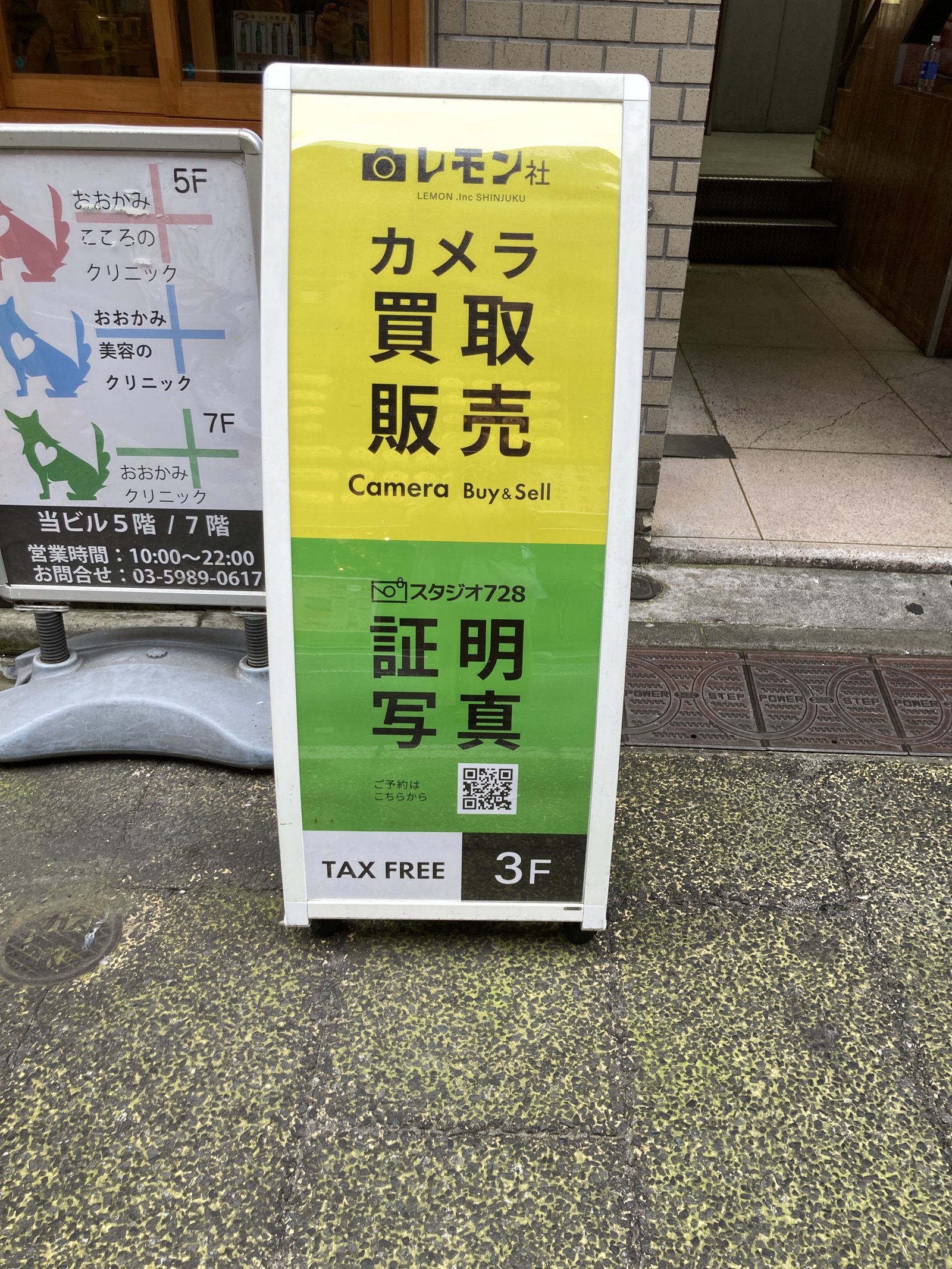
Tax-free shopping is one of the best reasons to buy a camera in Japan, and shops advertise it openly — you’ll see “TAX FREE” on signboards right on the street. Just ask at the register: “Do you accept tax-free?” and have your passport with you.
But there is one rule I want you to burn into memory: tax-free purchases cannot be returned or exchanged. At Map Camera, posters saying exactly this were everywhere in the shop. Once you buy tax-free, the deal is final. So do all your checking, questioning, and hesitating before you pay. Ask to see the item, ask “Can I hold it?”, take your time — and only then hand over your passport and card. I actually like that the shops post this warning so clearly: they are telling you the rules before there can be a problem, and that honesty works in your favor.
The part nobody tells you: these shops are friendly places
Let me end with the scene that sums up everything. At Lemon Company, I watched two foreign visitors — total strangers, from different countries — meet at a showcase, and one simply asked the other: “Where are you from?” And they started talking, with cameras as the excuse.
That’s what a Japanese camera shop really is. Not a test of your manners, not a place with hidden traps for foreigners — a small room where camera lovers from all over the world naturally end up standing next to each other. The staff are used to visitors, the rules are simple, and the worst thing that can happen when you’re unsure is that you ask a question and get an answer.
So: point at what you like, ask “Can I hold it?”, put your backpack on the rack, think twice before buying tax-free — and beyond that, stop worrying about etiquette and enjoy yourself. And if a stranger at the showcase asks where you’re from, you know what to do.
Everything in this guide comes from my own visits in July 2026, except where I clearly said I’m not sure. Individual shops have their own rules, so when in doubt — ask. That’s the whole secret.

コメント