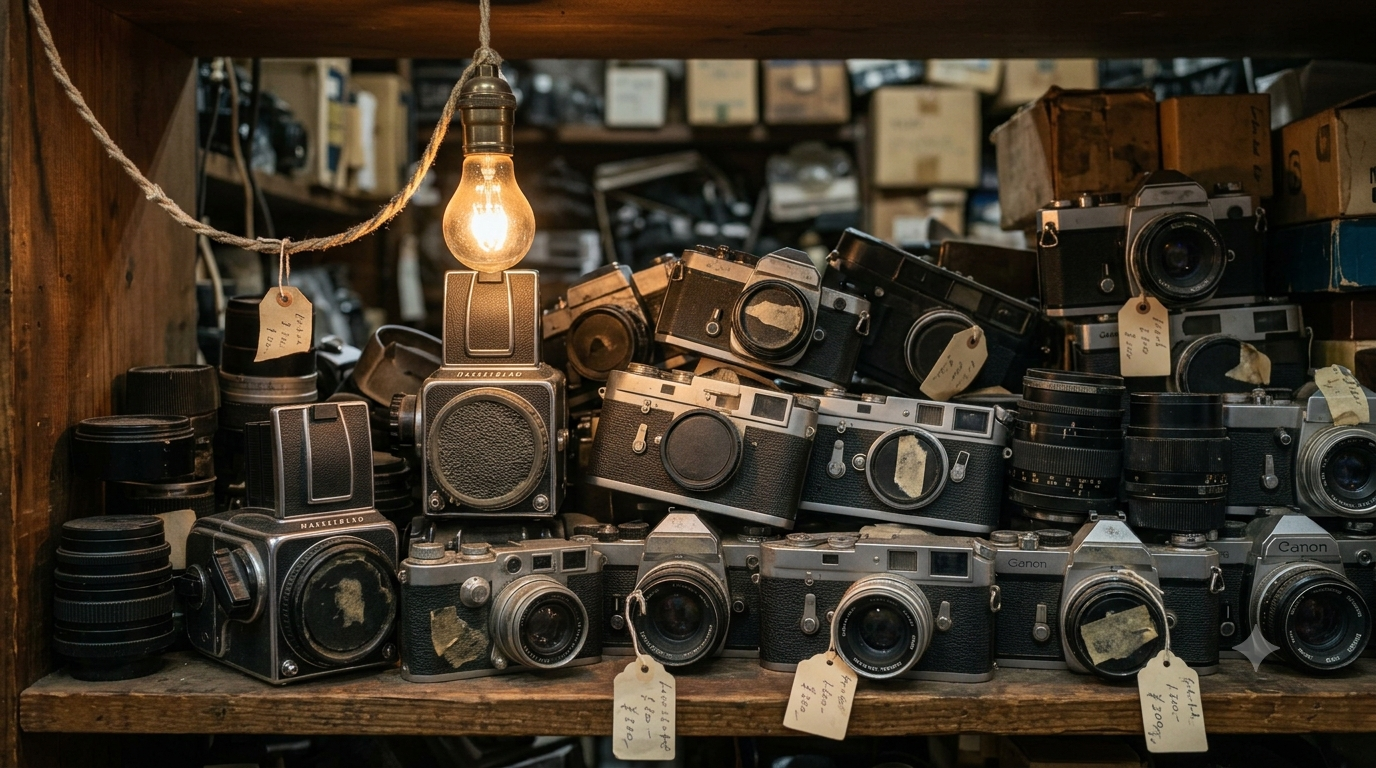
If you shop for used cameras from Japan, sooner or later you will see the word junk. On a shelf in a Tokyo shop, on a price tag, in an eBay listing title. For most English speakers, “junk” means garbage — something already dead. That is not what the word means here.
In Japan, junk is a category, not a diagnosis. It usually means one of two things: the seller has not tested the item, or the item has a clear, visible fault. It does not automatically mean the camera is broken. I explain the whole vocabulary in my guide to Japanese camera condition grades, so I will keep the definition short here.
But I also do not want to sell you the fantasy. Junk shelves are not a treasure chest. Most of what I have seen on them is exactly what you would expect: gear with fungus, haze, dents, and unknown shutters. The good part is that you get to look for yourself, at a low price, and nobody stops you.
This article is a “what I saw” piece, not a national survey. It is based on three junk sections I visited myself: the Junk Garage at Tokyo CAMERA in Akihabara and Lemon-sha Akiba (both on August 1, 2026), and the junk annex at Fujiya Camera in Nakano (July 12, 2026). Other shops will have other rules.
Junk shelves have different rules in different shops
This surprised me the first time, and it still catches visitors out. There is no single “junk shelf standard” in Japan. Each shop decides how much you are allowed to touch, how much they tell you, and how many items you can buy. Here are the three types I ran into.
Type 1: Self-service — Tokyo CAMERA’s “Junk Garage” (Akihabara)
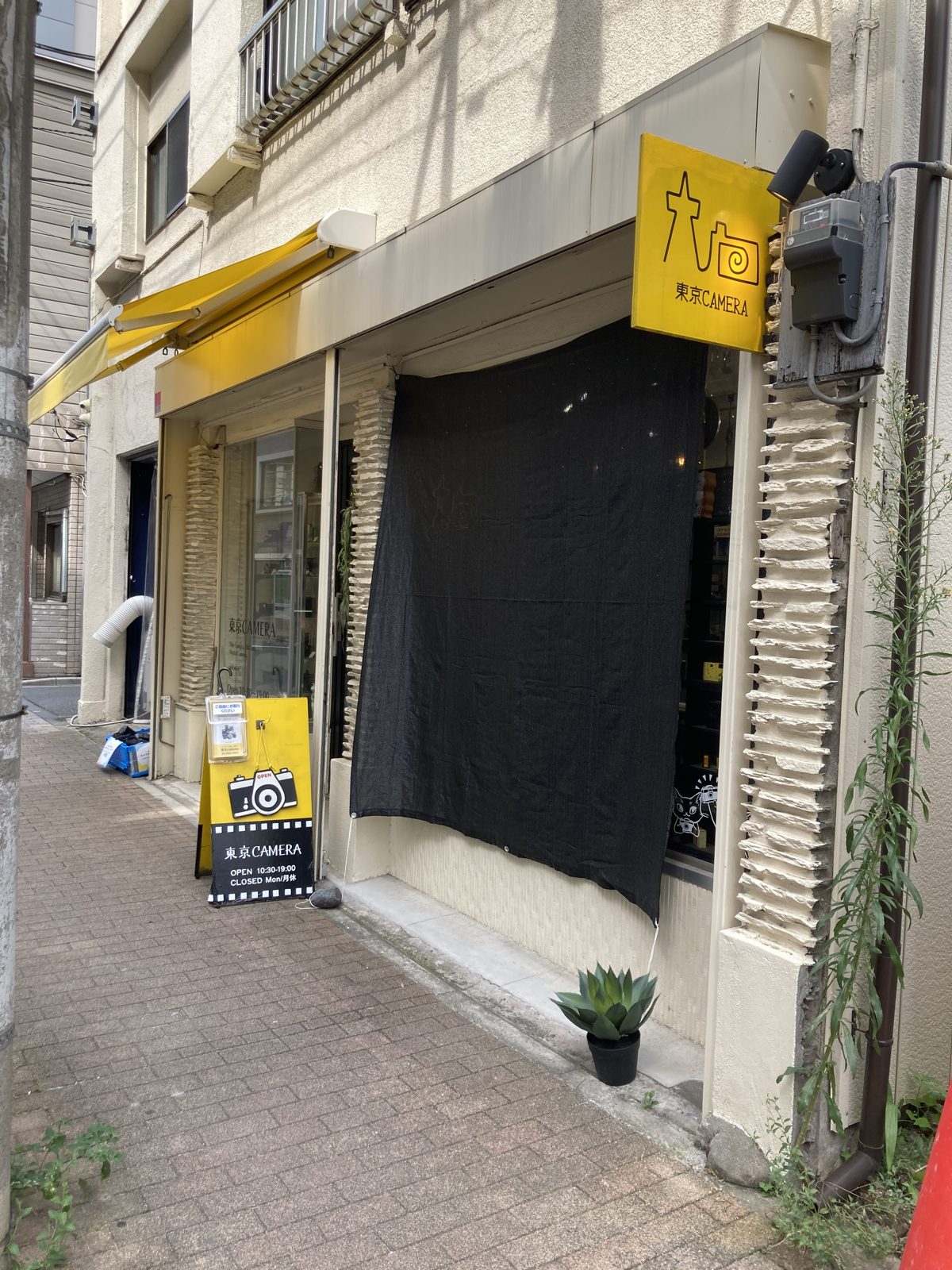
Next to the main Tokyo CAMERA shop is a separate warehouse-like space with a vinyl curtain instead of a door. They call it the Junk Garage. No staff stands inside — they are in the main shop next door — and there is a security camera.
There are no condition labels at all. Prices are simply stuck onto the gear. Lenses started around 3,000 yen, with plenty around 5,000 yen. And a sign — in English too — says you are free to check the items yourself: mounting a lens is fine, putting in a battery is fine.
That is the whole philosophy of this place: we are not going to tell you anything, so go find out yourself. Which means the responsibility is entirely on you. Most of what was on those shelves was not in good condition. That is normal for junk. What made it worth the visit was the freedom to check, and the price level.
One small thing I liked: while I was there, a foreign resident wandered in and browsed casually, the way you would browse a hardware store in your own neighborhood. It is not a tourist attraction. It is just a shop.
Type 2: Limits and translations — Lemon-sha Akiba
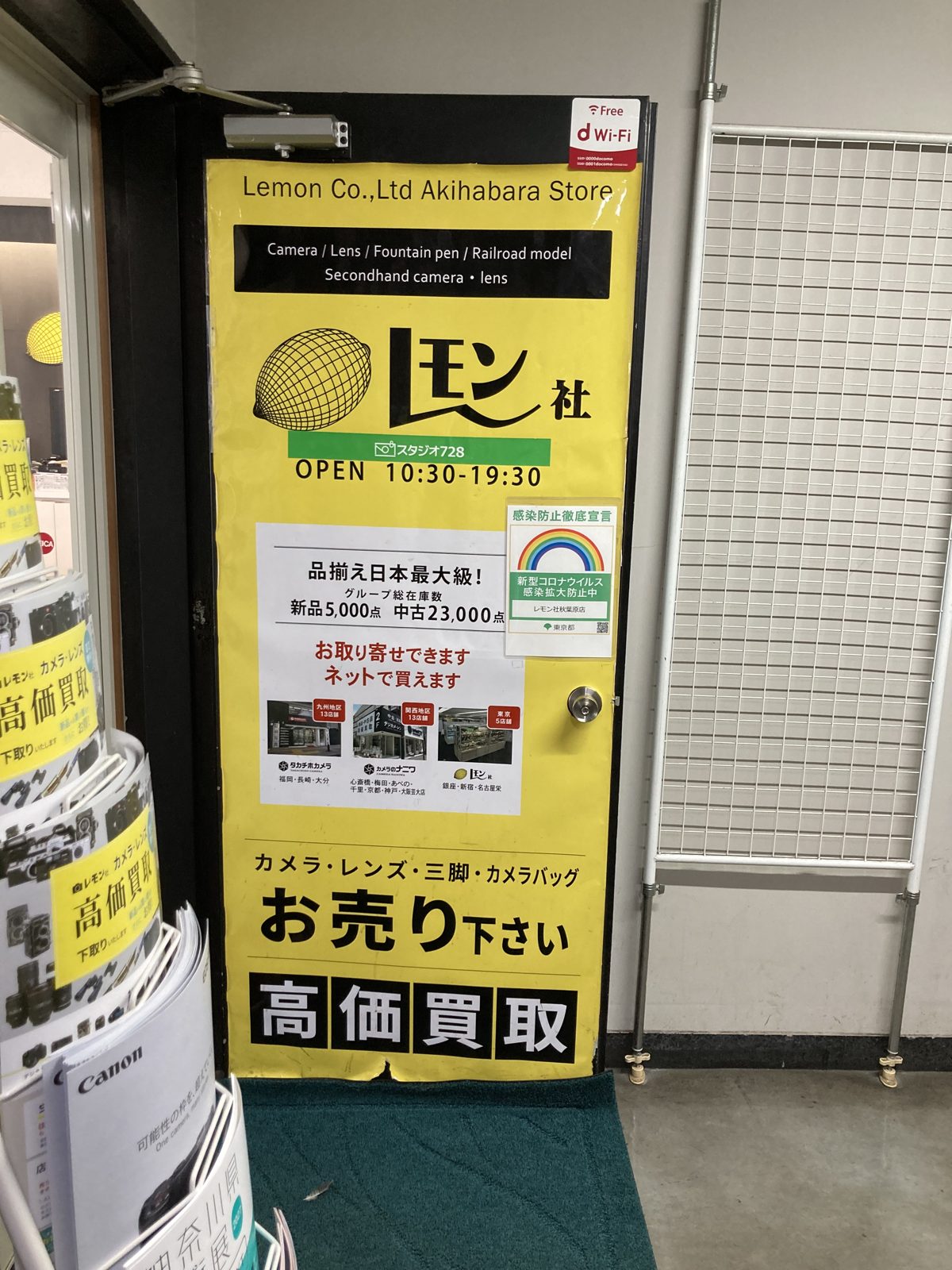
Lemon-sha’s Akihabara branch takes the opposite approach on both counts. First, there is a purchase limit: three junk items per person. Second, the condition rank printed on the price card has an English translation, so you are not decoding kanji to find out what grade you are looking at.
The shop is small — smaller than their Shinjuku store — and the entrance is a little easy to walk past. When I visited, there was one older gentleman working. If you want junk with at least some written guidance, this style is friendlier than a bare garage. More on this shop and the rest of the area is in my Akihabara camera shop guide.
Type 3: A whole building for junk — Fujiya Camera’s annex (Nakano)
In Nakano, Fujiya Camera has a separate small building that is entirely junk. It is dense, and when it gets busy the shelves are genuinely hard to see — people stand shoulder to shoulder.
Two practical points. You cannot browse while carrying a big bag; there is a bag drop in the middle of the shop, and you leave your bag there before you look. And on the glass door there is a notice in English asking customers to buy with full understanding that items are sold as-is. That notice is the shop telling you the rule up front, in your language. Take it literally.
I wrote about this building in more detail in Fujiya Camera’s junk annex, and about the area in my Nakano & Shinjuku shop guide.
What to check before you buy
Because nobody is going to check for you, this is the part that decides whether junk shopping works out. I use the same order every time — body and exterior, then optics, then function — and it takes me about five to ten minutes per item. The fungus and haze check is what takes the longest. I have written the full routine here: what I check on every used camera. I won’t repeat all of it in this article.
Two things worth adding for a junk shelf specifically:
Bring a small flashlight. Shop lighting is not made for spotting haze. Your phone light works, but a small dedicated light works better, and it makes the difference between “the glass looks fine” and actually knowing.
“Looks broken” and “is broken” are not the same thing. This is easy to forget when you are nervous and standing in a crowded shop. An automatic-aperture lens, off the camera, is supposed to sit with its blades wide open — that is normal, not a fault. I once had a small panic over a PENTAX 645 lens for exactly this reason. If something looks wrong, ask yourself whether you actually know how that part is supposed to behave.
You cannot return it
This is the one rule with no exceptions on a junk shelf: junk is sold as-is, and it is not returnable. That is what Fujiya’s English door notice is about. It is not the shop being unfriendly — it is the deal you are agreeing to when you pay. You checked it, or you chose not to; either way it is yours now.
So the sensible way to set your own limit is this: pay only what you would be willing to lose. Treat the price as tuition. If a 4,000 yen lens turns out to be dead, you learned something about checking lenses for 4,000 yen. If you would be upset about that, buy from the graded shelf instead — every one of these shops also sells tested, graded gear.
Prices I actually saw
These are the numbers from my own visits, not a market average.
- Tokyo CAMERA Junk Garage: lenses from around 3,000 yen, plenty at 5,000 yen.
- Kitamura Akihabara (4F used/junk floor): generally low prices, but a lot of the stock had fungus or haze. Their useful detail is a colored sticker on each item showing the month it arrived — blue for July, red for earlier, when I visited — so you can tell whether something has been sitting on the shelf for a while.
Prices and stock change constantly, so please treat these as a rough sense of the level rather than a price list.
So, is junk worth it?
It depends what you want from the trip. If you want a working camera to shoot with next week, buy a graded one. If you enjoy the hunt — opening a lens cap under a shop light, checking a shutter by ear, deciding for yourself — then the junk shelf is one of the more enjoyable hours you can spend in Tokyo, and it costs very little.
Just go in with the right expectations. The word does not mean garbage, and it does not mean bargain either. It means nobody is telling you. What you find out is up to you.

コメント