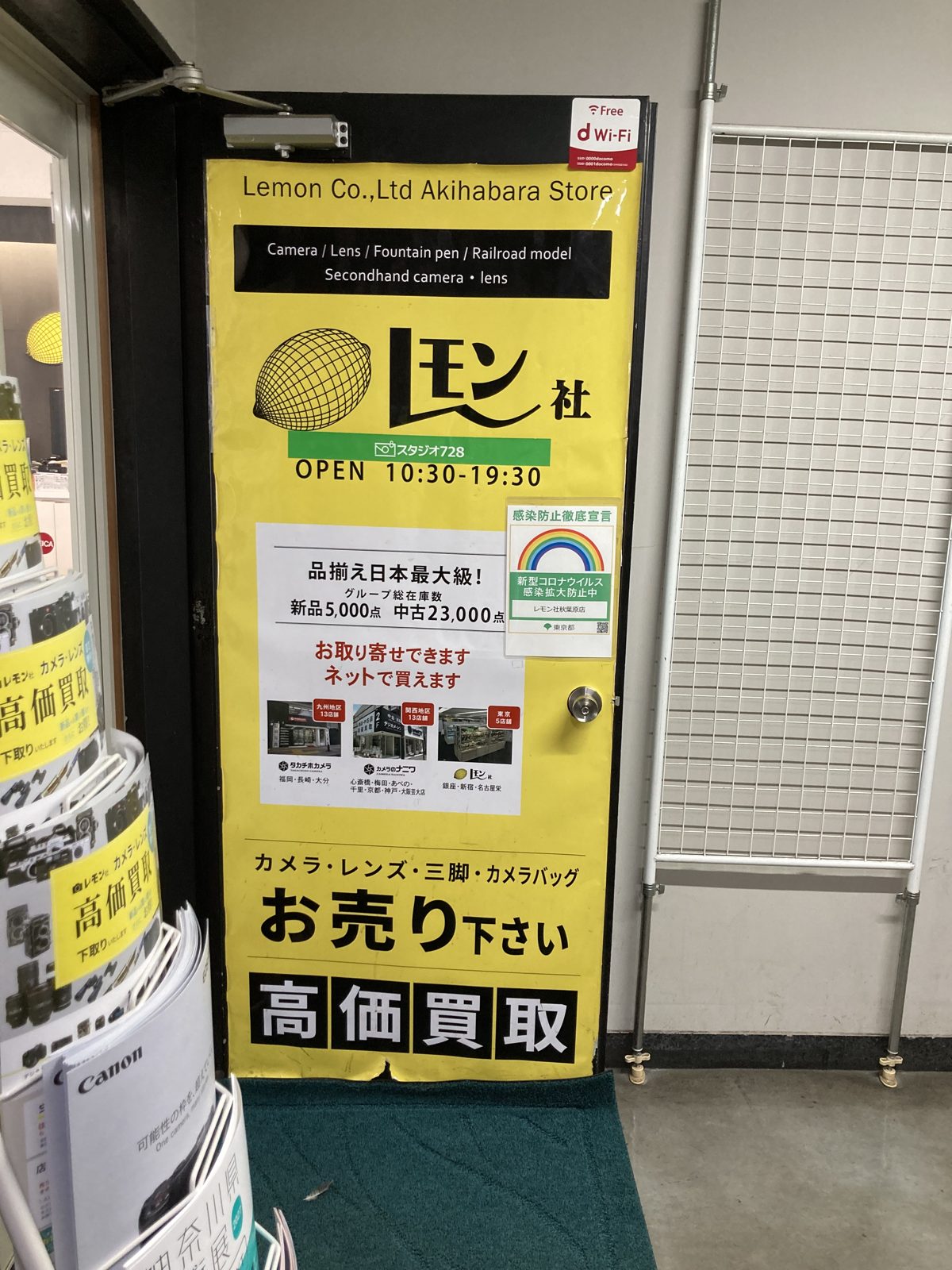
If you have searched for “Lemon Camera Tokyo”, you probably found the Shinjuku shop. But there is a second one, in Akihabara, and it is a different experience in a few small but real ways.
I visited Lemon Camera Akiba on August 1, 2026, as part of my walk around all the used camera shops in Akihabara. It got one short section in my Akihabara camera shop guide. This article is that section, expanded — and put side by side with the Shinjuku store.
The sister shop of the Shinjuku store
Lemon Camera Akiba is the sister shop of the Shinjuku location I wrote about here: Lemon Company in Shinjuku. Same company, same kind of shop — used cameras and lenses in showcases, plus a junk corner.
The clearest difference is size. The Akihabara shop is smaller than Shinjuku. If you have already seen Shinjuku, do not walk in expecting the same amount of stock. Think of it as a compact version, not a second full store.
I want to be careful here, because a comparison is only useful if it is accurate. What I can compare are the things I saw in both shops with my own eyes: the size, the entrance, and the way the price tags are written. Other things — the layout, the staff, how the buying counter works — I only looked at closely in Shinjuku, so I am not going to pretend I can compare them.
The entrance takes a little courage (again)
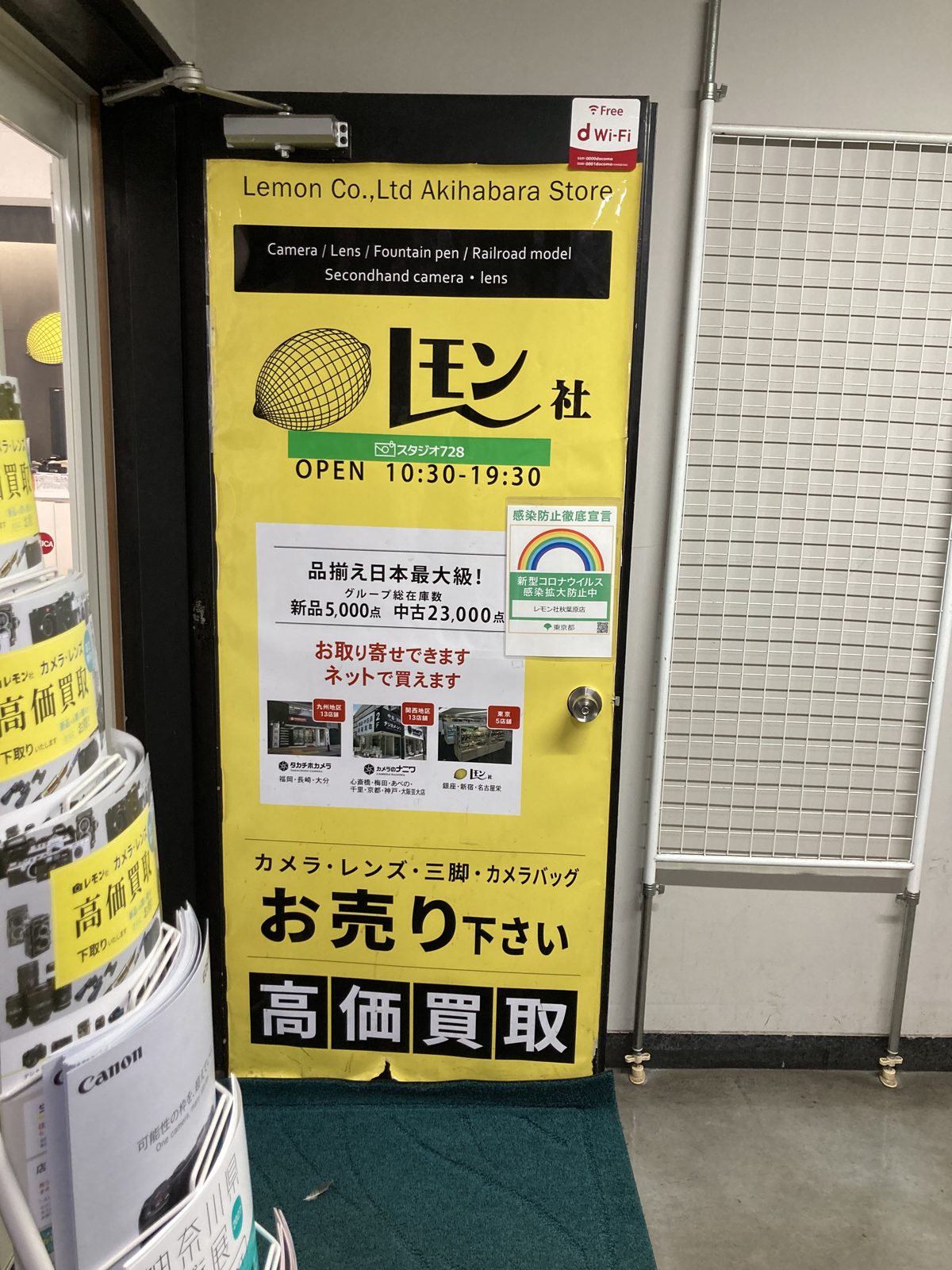
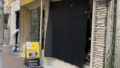
In the Shinjuku article I wrote that the entrance takes a tiny bit of courage — the shop is up a staircase and does not look inviting from the street. Akihabara is the same kind of entrance. It is on the 3rd floor of an office building, and standing on the pavement you get that “do I really go up here?” feeling.
Yes, you do. This is worth knowing before you travel, because in Akihabara a lot of camera shops hide on upper floors, and a visitor who only trusts street-level shop windows will walk past most of them.
English on the condition tags
This is the detail I would tell a visiting photographer first: the price cards include English translations of the condition ranks.
That matters more than it sounds. In most Japanese used camera shops the price is easy to read and the condition note is not — it is written in Japanese, often in shop-specific shorthand. So you can see that a lens is 28,000 yen, and have no idea whether that means clean glass or light haze. Here, the rank is spelled out for you on the tag.
If you still want to understand what those ranks actually mean across different shops, my guide to Japanese camera condition grades covers the system.
What was on the shelves, and the junk rule
When I visited, customers were mostly looking at compact cameras and film. That is what I saw people picking up and asking about, and it fits the size of the shop — this is a place to look for a film compact, not to compare five versions of the same big SLR.
There is one rule you should know before you get excited in the junk corner: junk items are limited to 3 per person. I did not ask why, so I will not guess at the reason. Just plan for it — if you are the kind of buyer who fills a basket, you will have to choose.
One older gentleman was running the shop while I was there. The atmosphere was quiet. Nobody rushed me.
Getting there, and what I could not confirm
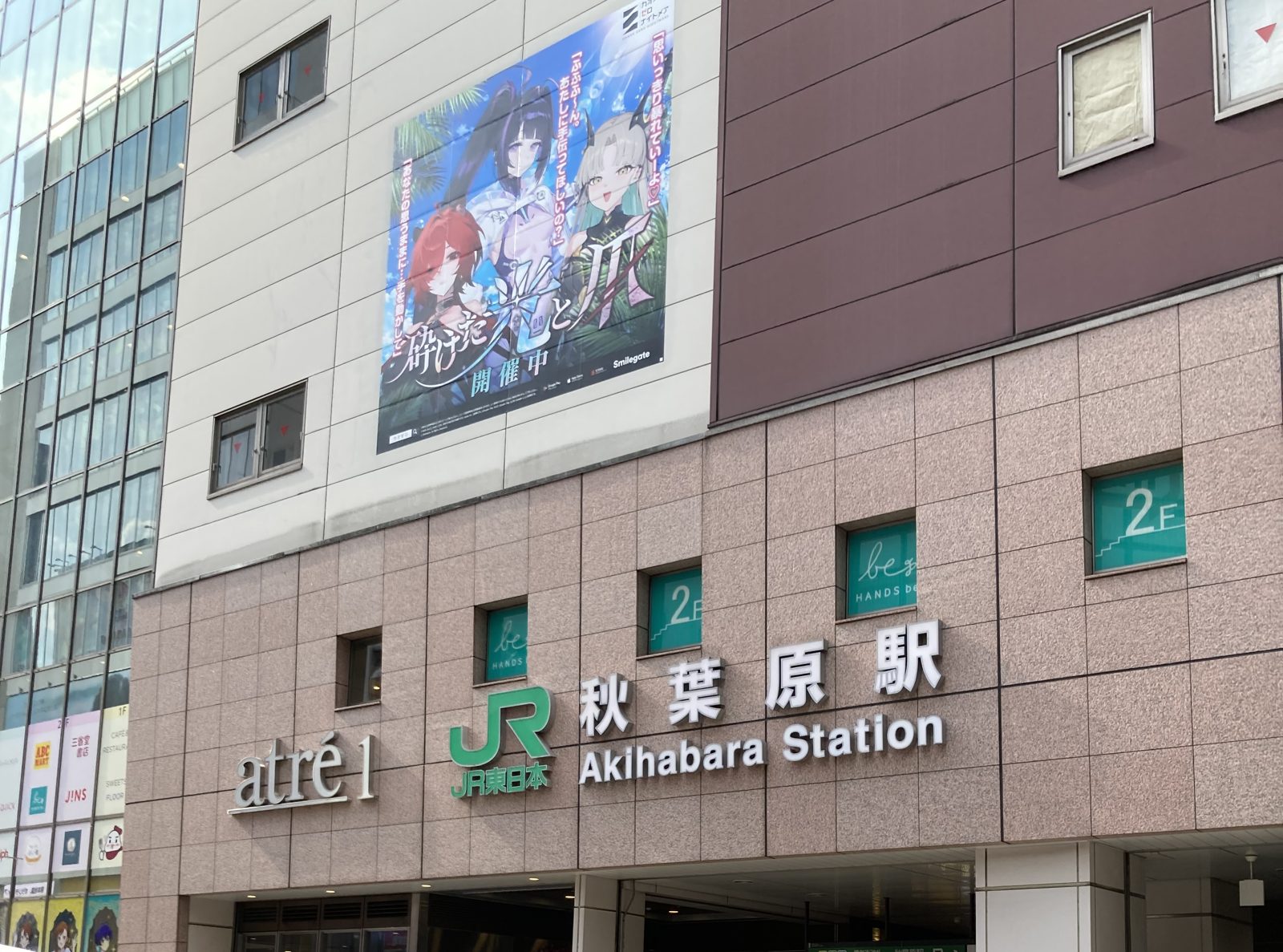
Akihabara Station is on the JR Yamanote Line, so it is easy to reach from anywhere in central Tokyo, and the shop is within about a ten-minute walk. Hours were 10:30–19:30 when I visited on August 1, 2026 — the same hours I saw at the Shinjuku shop on July 12. The Shinjuku entrance has a notice board giving those hours and saying there is no regular closing day, and the notice is headed “Hours guide” in English as well as Japanese; I wrote about it in my Nakano and Shinjuku itinerary. That closing-day note is what I read at the Shinjuku entrance, though — I did not check whether the Akihabara branch has a regular closing day, and two shops on two days is not enough for me to tell you what every Lemon branch does. Hours change, so check the official information before you go.
Things I do not know: I did not confirm whether this branch does tax-free shopping or takes credit cards. In Shinjuku both were fine on my visit, but I am not going to assume the Akihabara branch is the same. Carry some cash.
On my day, this was a late-afternoon stop of about 30 minutes, after Tokyo CAMERA and its Junk Garage. If you want the whole route with rest stops built in, it is in my one-day Akihabara itinerary. And it was 37°C (99°F) that day — in summer, an air-conditioned shop on the 3rd floor is a break as well as a stop.
Shinjuku or Akihabara: which Lemon should you go to?
If you can only visit one, and you want the bigger selection and the more relaxed browse, go to Shinjuku. It is the larger shop, it is about five minutes from Shinjuku Station’s South Exit, and tax-free and cards were both fine there.
Go to Akihabara if you are already in Akihabara. That sounds obvious, but it is the real answer: this branch is a good 30-minute stop in the middle of an Akihabara camera day, especially if you are hunting film compacts and you like being able to read the condition rank in English. It is not a reason to cross Tokyo on its own.
Everything above is what I saw on August 1, 2026. Stock, hours and shop rules change, so please check before you go.

コメント