
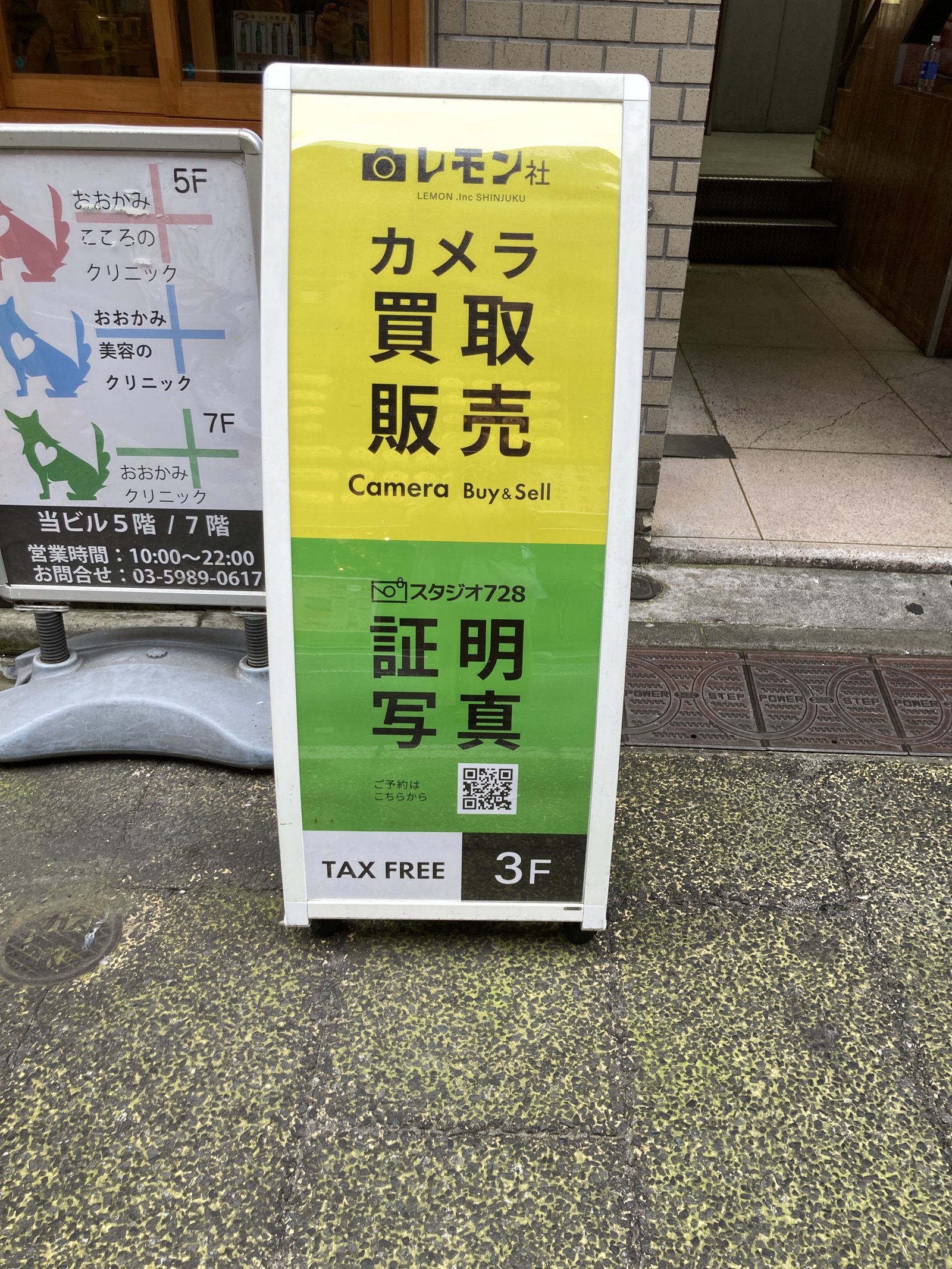
In my Tokyo camera shop walk (Nakano & Shinjuku), I visited three shops in one day. I already wrote a deep-dive on Fujiya Camera’s junk annex in Nakano. Today it is Shinjuku’s turn: Lemon Company (レモン社).
If I had to describe Lemon Company in one sentence, it would be this: of the three shops I visited that day, this was the one where I could browse most freely, at my own pace. For many visitors to Japan, that alone makes it worth knowing about. Let me explain why.

Why “browsing at your own pace” matters
Here is something I think many foreign visitors feel in Japanese shops, even if nobody says it out loud: the quiet worry of being watched, or of a staff member coming over to talk to you. When you don’t speak Japanese, that little bit of pressure can make you rush through a shop you actually wanted to enjoy slowly.
At Lemon Company, I did not feel that pressure at all. And I think there is a simple, physical reason for it: the staff area is at the back of the shop. While you browse the showcases, the staff are behind you-and-out-of-the-way, not in the middle of the room. Nobody approached me while I was looking. The shop itself is on the compact side, and because I felt so relaxed, I ended up walking around it two or three times, slowly, checking everything.
Compare that with Fujiya Camera in Nakano. There, the staff area is in the center of the shop and the showcases are along the walls — so wherever you stand, the staff are behind your back. To be very clear: this is only about how the layout made me feel. I have no idea whether anyone was actually watching me, and the Fujiya staff did nothing wrong at all — this is simply what the structure of each shop does to your nerves. Lemon’s “staff at the back” layout happens to be the most relaxing one for a nervous first-time visitor. (By the way, Map Camera also keeps its staff area toward the back, and browsing felt easy there too — Lemon is not the only shop with this comfortable layout.)
What is on the shelves
Lemon Company has a reputation as a shop that is strong in old lenses, and the selection matched that reputation on my visit. I saw the familiar classics that people come to Japan hoping to find — film compacts like the CONTAX T2, and rows of well-known cameras and lenses. If you have a mental checklist of famous Japanese gear, you will recognize a lot of it here.
One thing to know: the main items are inside glass showcases. If you want to hold something, you ask a staff member — the normal style in Japanese camera shops. Pointing works fine even without Japanese.
The junk corner: open shelves, wide range of condition
The junk items sit on open shelves, like bookshelves, and this is the part you can freely pick up and check with your own hands. The mix is wonderfully random: cameras, lenses, video cameras, chargers, and — especially on the lower shelves — some mystery objects where I honestly thought, “What even is this?”
Be realistic about condition here: it varies a lot, from decent to very rough. That is the nature of junk shelves — no guarantees, as-is. If you read my Fujiya article, you may remember that the accessories in Fujiya’s annex were mostly in surprisingly clean condition. Lemon’s junk shelves felt different: more freedom to touch everything, but a much wider range of condition. Neither is “better” — they are two different kinds of treasure hunt. Since you can inspect everything in hand at Lemon, use that freedom and check carefully before you buy.
The scene that stayed with me
Now, the moment that made this visit special for me.
While I was browsing, a foreign customer was at the counter talking with a staff member about selling gear to the shop. The staff member was responding in English — mixed with some Japanese, but English. I don’t know how the deal ended, and I won’t guess. But the fact itself impressed me: at this shop, a foreign visitor can walk in and have a buy-back conversation in English.
Then it got better. When that customer finished at the counter and started looking at the showcases, another foreign visitor walked up and asked: “Where are you from?” Two strangers, from different countries, starting a conversation in a Tokyo camera shop — with cameras as the excuse.
This is exactly what I started this blog to write about. A Japanese camera shop is not just a place to buy gear. It is a place where camera lovers from around the world naturally end up in the same small room, and sometimes they start talking. I got to watch it happen in real time.
Not just a shop: a little bit of photo culture
Two small things add to the atmosphere. Near the entrance there are photos from the company’s early days, so you feel the history the moment you walk in. And there is a photo studio attached to the shop. I won’t make a big story out of these — but together they give Lemon Company the feeling of a place that deals in photography itself, not just used gear.
Practical notes
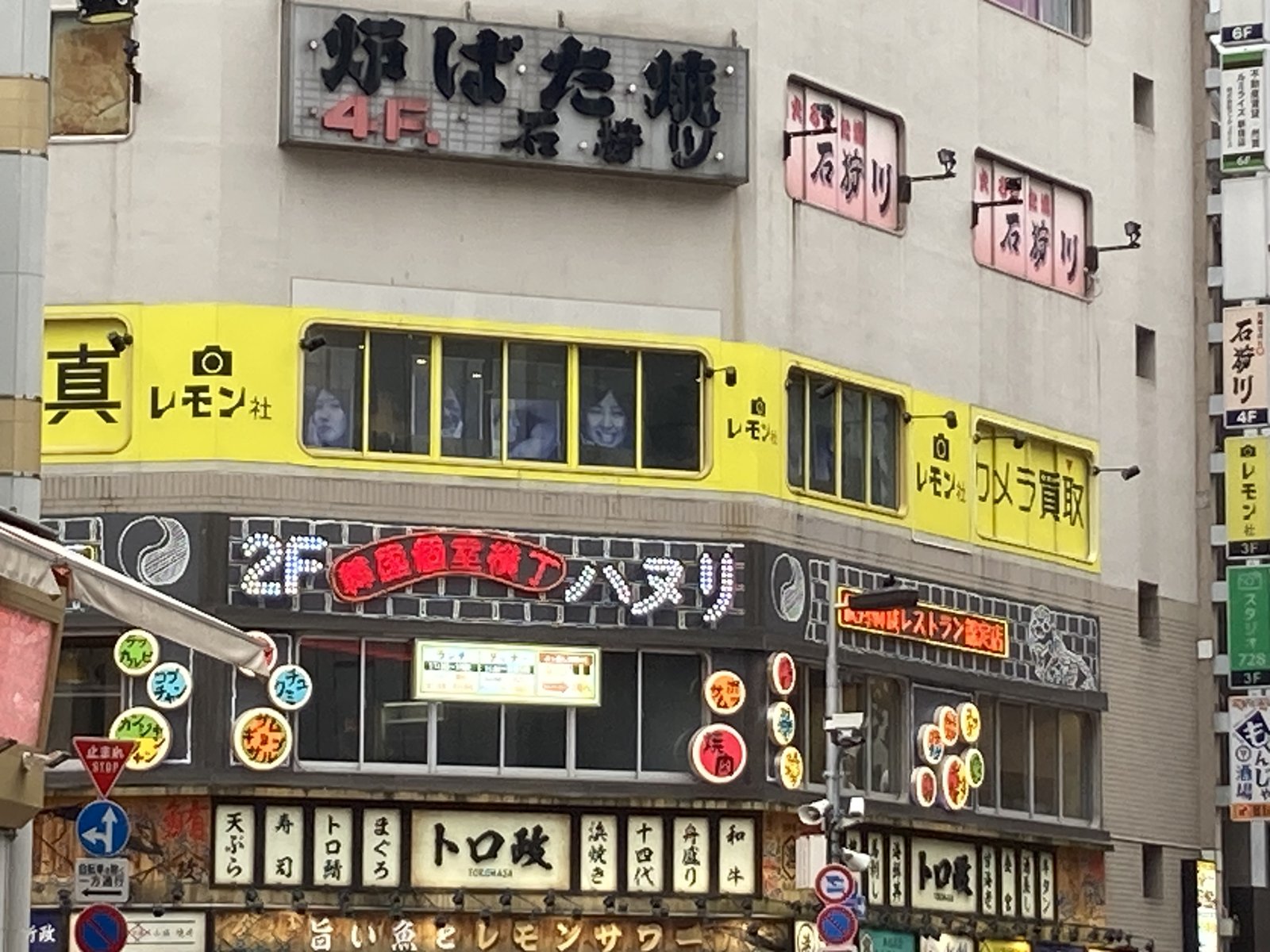
- The entrance takes a tiny bit of courage. The shop is up a staircase, and from the street it does not look inviting. But step inside and the gap surprises you — it is clean and welcoming. Don’t turn back at the stairs.
- Tax-Free: yes. Credit cards: yes. Both were fine on my visit — reassuring for visitors.
- Location: about 5 minutes on foot from Shinjuku Station’s South Exit. Please check the official website for current opening hours before you go.
Wrapping up
Fujiya in Nakano gave me the deep local experience, and its annex gave me the accessory treasure hunt. Lemon Company gave me something different: the most relaxed browsing of the day — a compact shop where the staff stay in the back, where you can circle the floor two or three times without pressure, pick up junk items with your own hands, and maybe overhear two strangers from opposite sides of the world asking each other where they are from.
If it is your first time in a Japanese used-camera shop and you are a little nervous, this is the one I would send you to first. Everything above is what I saw with my own eyes on my visit in July 2026 — shop details can change, so check the official site before you go. And if someone asks you “Where are you from?” at the showcase, tell me how the conversation went.


コメント