I already wrote a shop guide for the used camera shops in Nakano and Shinjuku. That article is a list: what each shop is like, what they sell, how easy they are for a foreign visitor.
This article is different. It answers a different question: how do you actually spend one day across these two towns?
And here is the thing that makes this day different from my Akihabara day. In Akihabara, the shops sit close together — you walk from one to the next in a few minutes, and you can fit six shops into a day. Nakano and Shinjuku are two separate towns, with a train ride in between. That changes the whole shape of the day. You visit fewer shops, and you spend longer inside each one.
I walked this route myself on July 12, 2026. Everything below is what I saw that day.
About the schedule. I do not remember the exact times from that day. I started in Nakano around 11:30, and I moved to Shinjuku around 13:00. Everything in between is approximate. So this article does not give you a minute-by-minute plan. Read it as two half-days instead.
The Day at a Glance
- Around 11:30 — Start in Nakano: Fujiya Camera, main store (1F and 2F)
- After that — Fujiya’s junk annex, a few doors down and across the street
- Late morning / early afternoon — Coffee break at Renoir, right next to Fujiya
- Around 13:00 — Train to Shinjuku
- Afternoon — Map Camera (the camera department store)
- After that — Lemon Company (the relaxed one)
- Late afternoon — An early dinner in Yoyogi, one stop away
Two towns, one short train ride, four shops. That is a full day — I was tired at the end.
Morning: Nakano, and Fujiya Camera
Nakano is easy to reach. Take the JR Chuo Line from Shinjuku Station — it is one stop on the rapid train. Fujiya Camera is about 5 minutes on foot from Nakano Station’s North Exit.
One small navigation note from my own walk. On the way, there is a corner where you turn — and when I was there, a Gindaco stood on that corner. Gindaco is a takoyaki chain (takoyaki are grilled octopus balls, sold from a hot griddle, and you can smell the shop before you see it). It made an easy landmark for me that day. I would not treat it as permanent, though — shops move and change, so use it if it is still there and use a map if it is not.
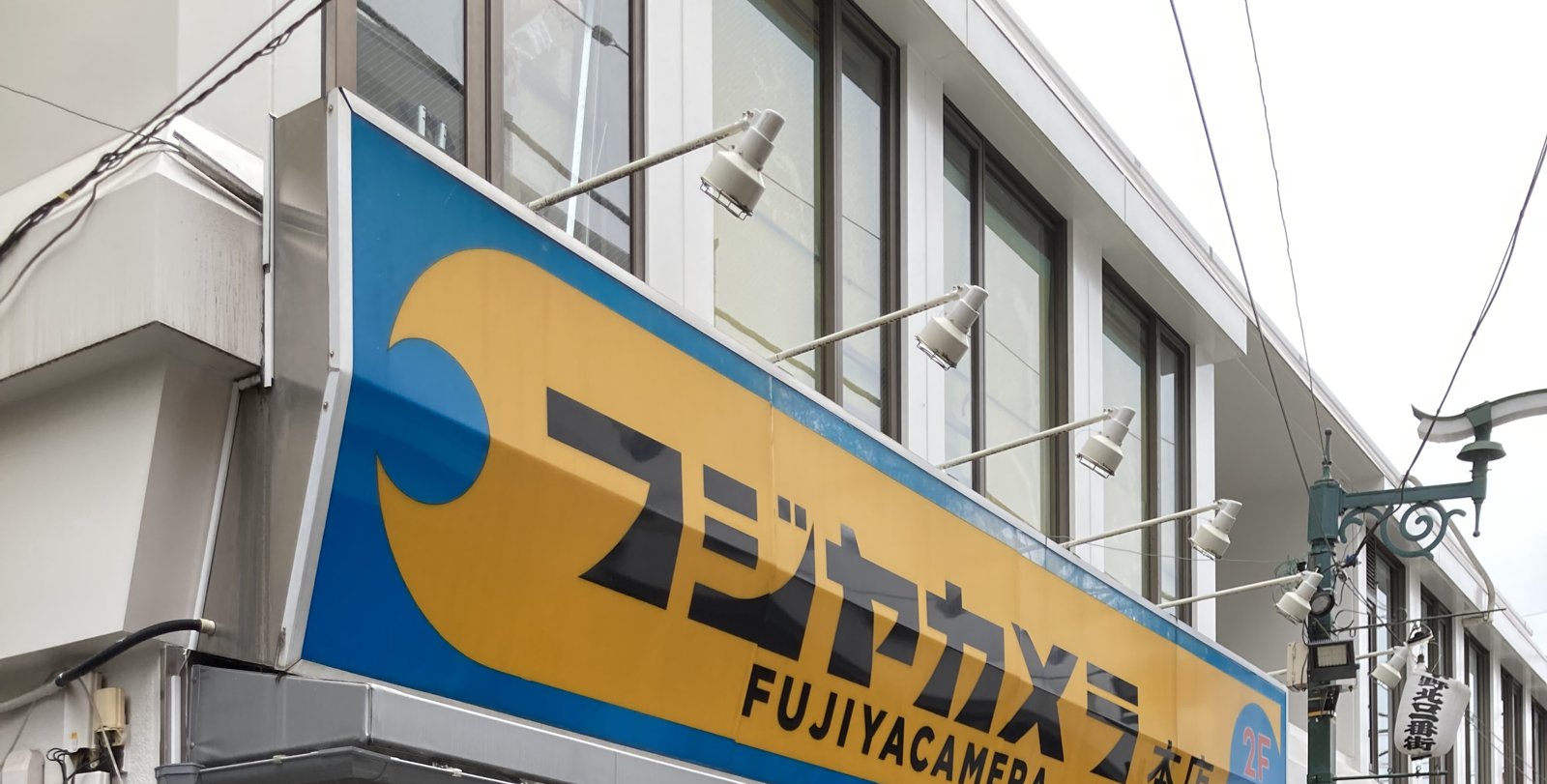
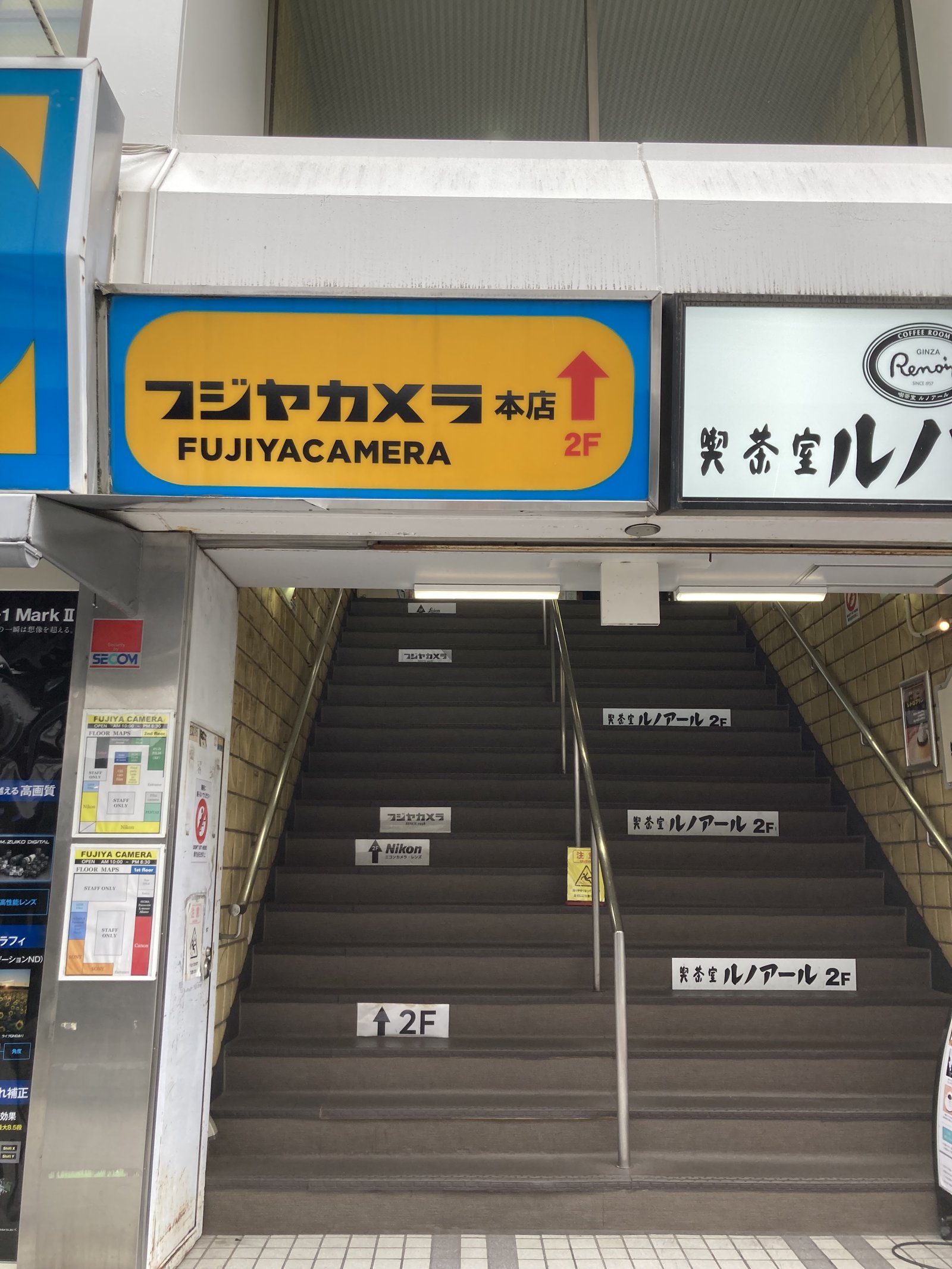
I started around 11:30. My first tip is the one I wish someone had told me: Fujiya has sales floors on both the 1st and the 2nd floor, with separate entrances. It is easy to look at the 1st floor and think that is the whole shop. I nearly did exactly that. The 1st floor is mostly Canon; Nikon, Leica and others are upstairs.
Inside, almost everything is in glass showcases. If you want to hold something, you ask a staff member. That is the normal style here, so don’t be shy — pointing works fine without Japanese.
A few notes from my visit. Inside the shop I did not see English signs, but at the stairs to the 2nd floor there are English floor maps with opening hours, showing which brands are on which floor. Check those first. I did not see a Tax-Free sign, but I did see a foreign customer showing a passport at the register, and Fujiya’s official English page calls the shop a “JAPAN TAX-FREE SHOP” (as I read it on October 13, 2026). That page still describes the system that ends on October 31, 2026, and it does not say which of Fujiya’s buildings it covers. If it matters to you, ask. On cards, I overheard staff telling someone on the phone that a card could not be used, so some brands may not work. Cash as a backup is a good idea.
The customers were mostly Japanese men, some deep in conversation with the staff. It feels like local camera culture, not a tourist stop.
Give this shop real time. In Akihabara I gave most shops 30 to 60 minutes because the next one was three minutes away. Here, the next shop is a train ride away. Slow down.
Midday: Fujiya’s Junk Annex
Fujiya also has a small separate building for junk — untested, as-is gear sold cheap with no guarantees. It is not attached to the main store: walk a few doors further along and cross to the other side of the street. For me, this was the highlight of Nakano.
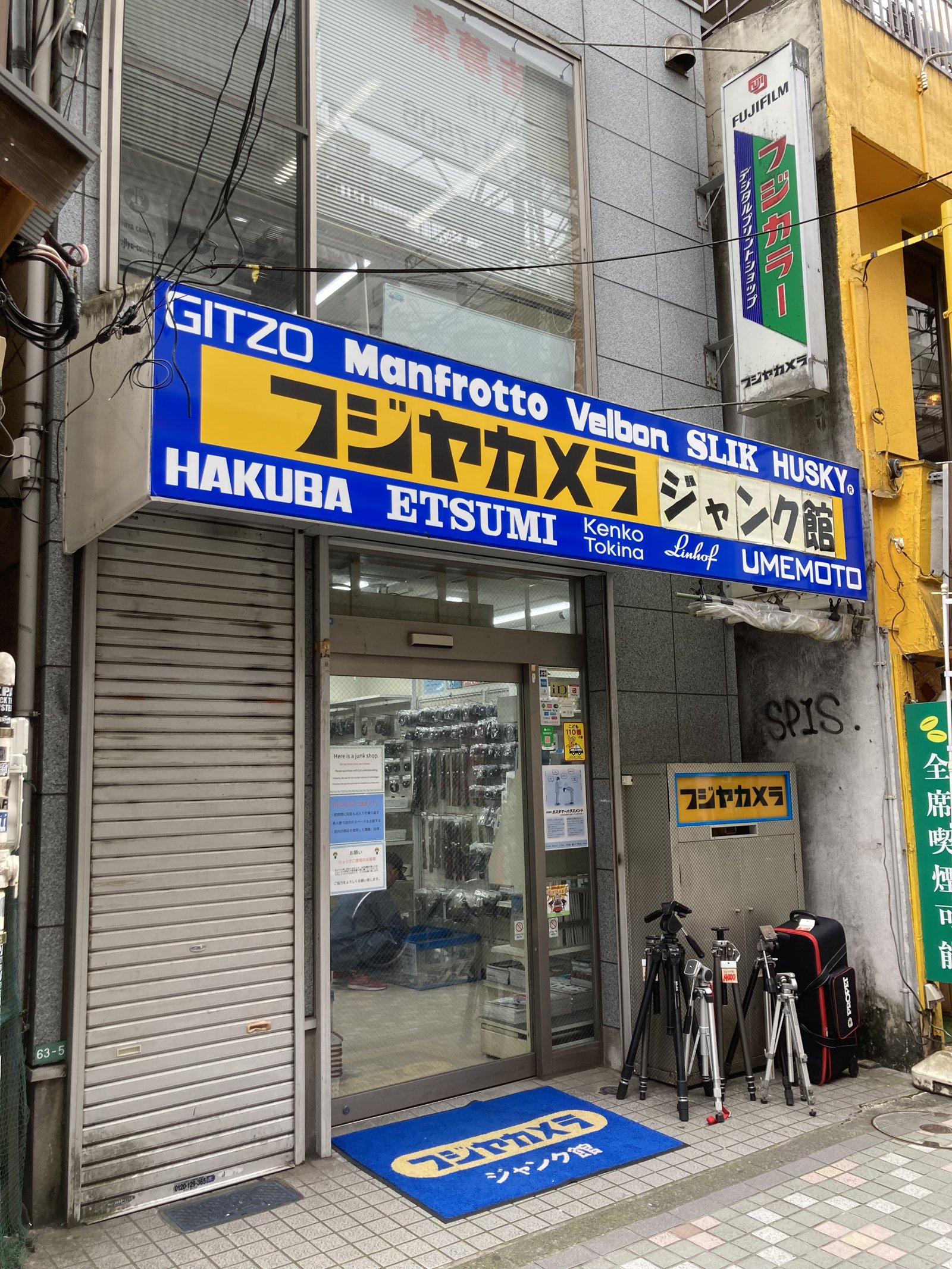
The cameras and lenses sit loose in plastic boxes. On my visit the annex was crowded, other customers were standing around those boxes, and I could not get close enough to pick the cameras and lenses up myself. So for those, I can only tell you what I saw, not how they felt in hand.
But the accessories surprised me, and those I could pick up. Genuine Nikon and Canon straps. Genuine caps and hoods. Soft lens cases, many in clean condition. Japanese camera magazines. Even original instruction manuals.
Think about that from a visitor’s point of view. If you own a classic Nikon or Canon at home, finding the correct metal hood or an original cap for it can be a long hunt in your country. In Japan these small genuine parts move through the used market every day. That is why a shelf like this is worth your time even if you are not buying a camera. A genuine strap or hood is small, light, and it upgrades a camera you already own.
Two practical rules here. The space is narrow, so leave big bags on the rack in the middle of the shop — don’t browse with a backpack on. And the glass door has an English notice: this is a junk shop, purchase with full understanding, no returns or exchanges. I like seeing that. It means foreign visitors are expected.
I wrote a longer piece on this annex if you want the full version.
The Break: Renoir, Right Next Door
After two shops I sat down at Renoir, a chain of quiet, old-style Japanese coffee shops. This one is right beside Fujiya Camera, which makes it almost too convenient to skip.
I had an iced coffee and a sandwich, and spent the time going through my notes. That is really what the break is for. A camera shop asks a lot of your attention — condition, price tags, what you actually want — and after two of them, sitting down with a cold drink and thinking about what you saw is not wasted time.
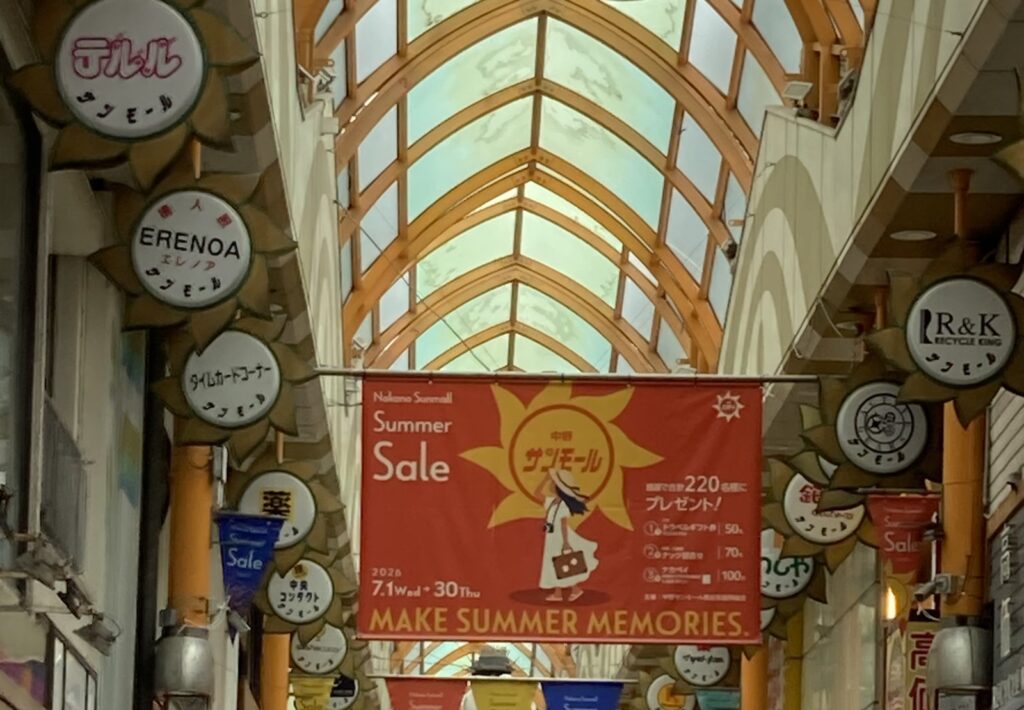
Renoir food is light: sandwiches, cake, that kind of thing. Fine for a rest, not a full lunch. If you want a real meal before you get on the train, look for something else in Nakano — the Sun Mall shopping arcade by the station is full of options. I did not eat there that day, so I cannot recommend a specific place.
Around 13:00: The Train to Shinjuku
This is the part that does not exist in the Akihabara version of this day: you pack up and move towns.
The ride itself is nothing — one stop on the JR Chuo Line rapid, a few minutes. But it does two useful things. It gives you a natural break point in the day, and it draws a clean line between two very different kinds of shopping. Nakano was plastic boxes and narrow aisles. Shinjuku is going to be glass, floors, and polish.
I timed the whole move, from the Nakano Station entrance to the Map Camera sign, in a separate article: Nakano to Shinjuku: how long it takes, which train, which exit.
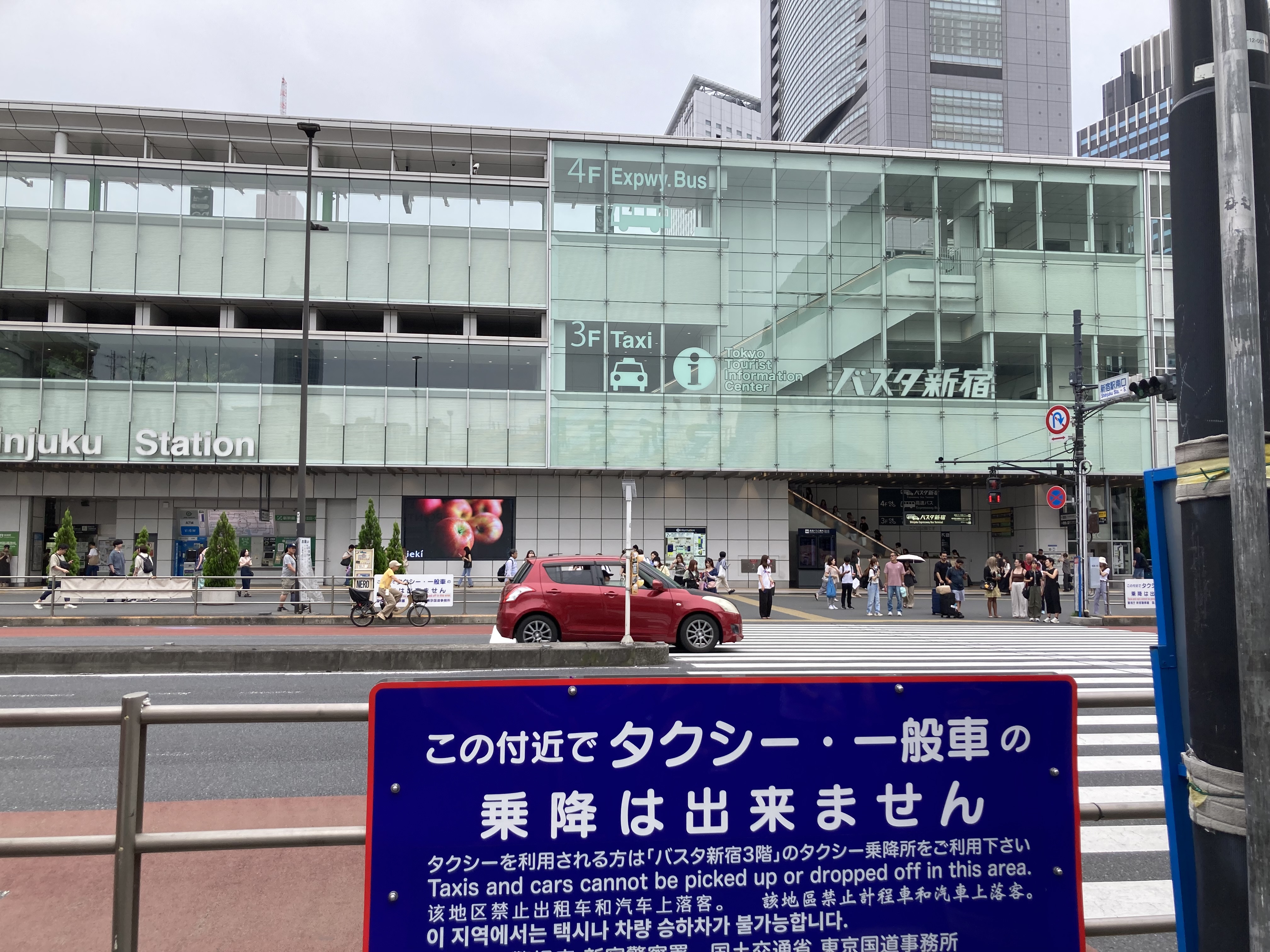
The real challenge in Shinjuku is not the train. It is the station. Shinjuku Station is enormous, and picking the wrong exit can cost you ten minutes of walking. Both camera shops are about 5 minutes on foot from the South or West Exit, so head that way.
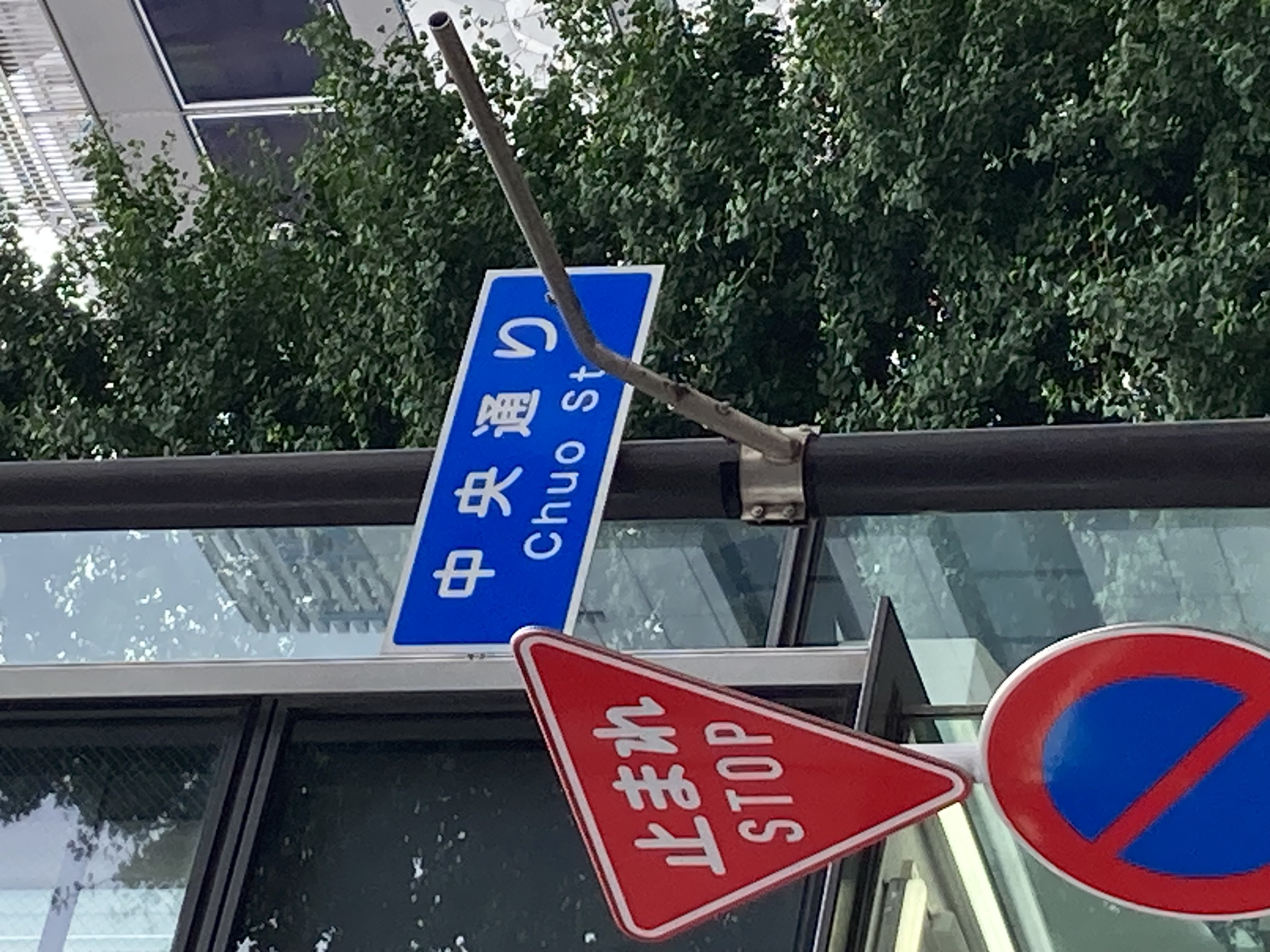
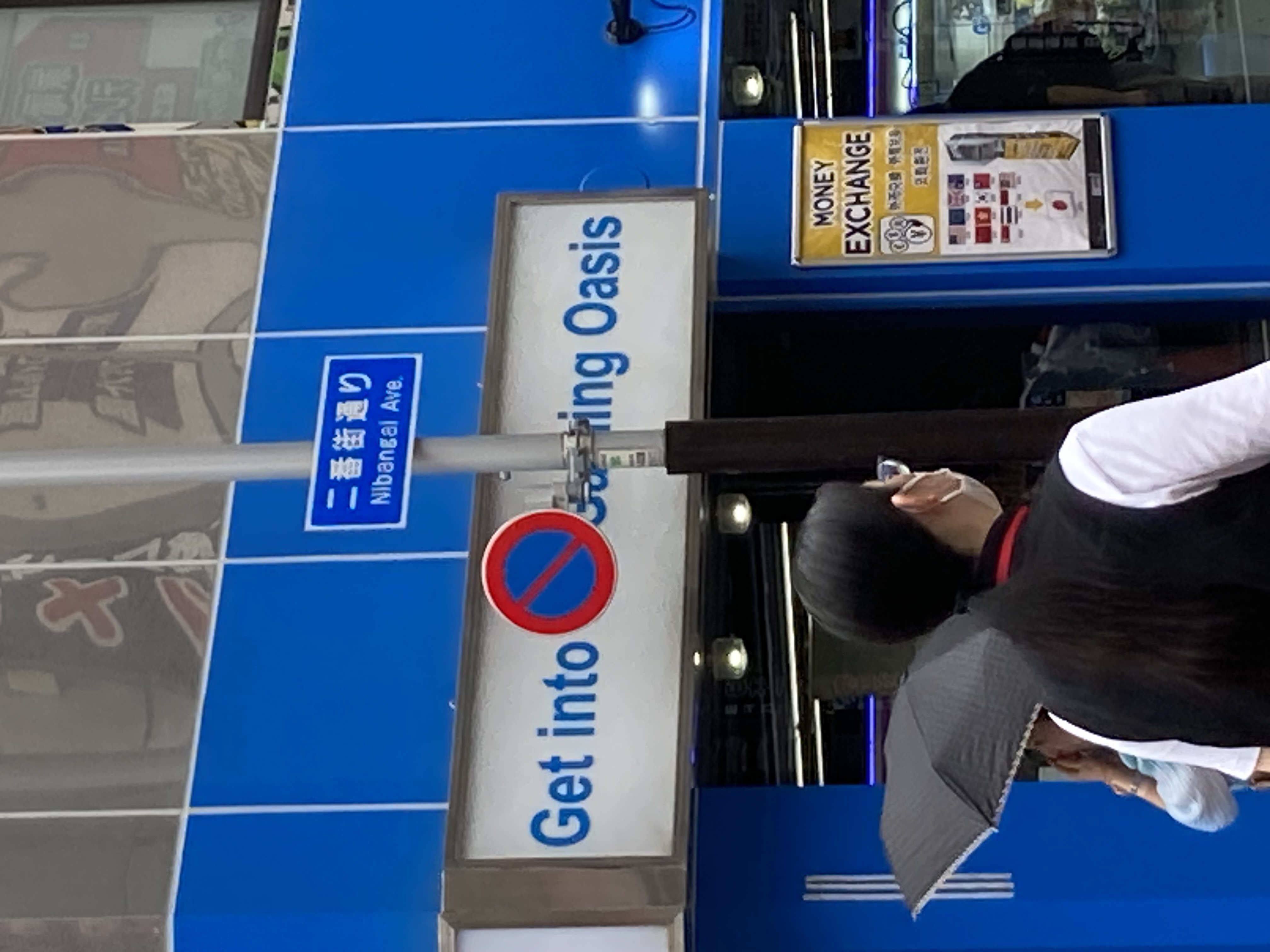
From there the street signs do the work. The area is laid out in named streets, and the signs carry the names in English as well as Japanese, so you can follow them without reading Japanese.
Afternoon: Map Camera, the Camera Department Store
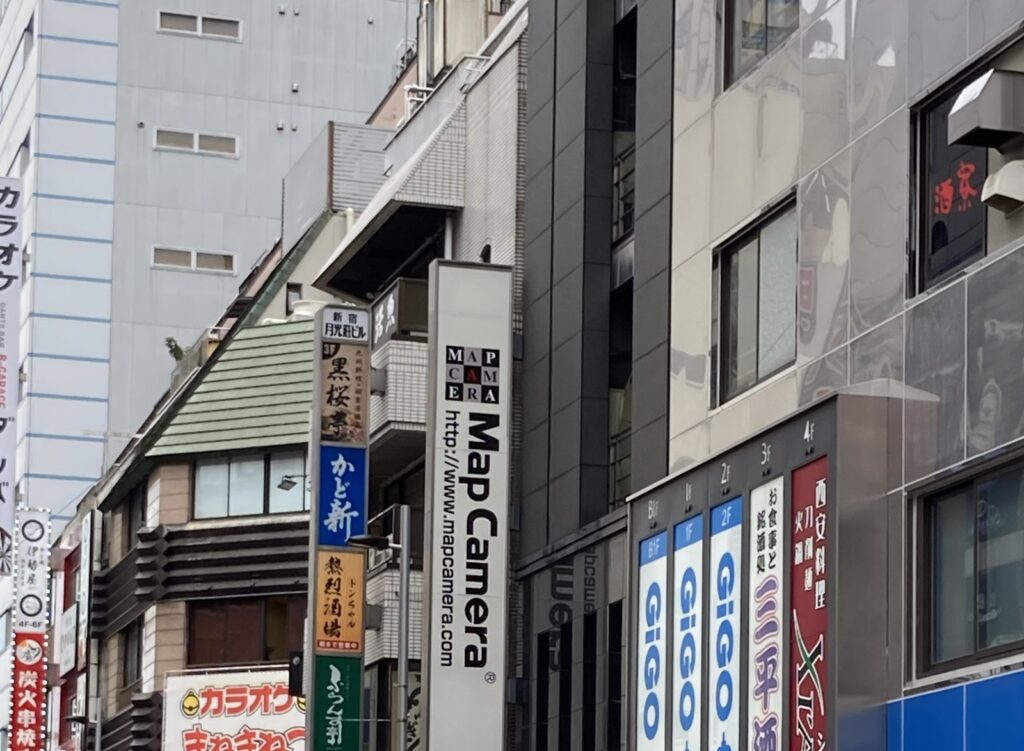
Map Camera is a whole building — five floors plus a basement, organized by brand. Of the shops I visited that day, this is the largest, the most polished, and the most ready for foreign visitors: English signs, Tax-Free, credit cards, all fine.
The entrance is a passage on the side of the building. The passage walls have camera panels, and right at the entrance there is a guide showing which brands are on which floor. The elevator is at the back of the passage; near the front are the 1st floor entrance and the stairs down to the basement. On my way out I saw a foreign customer standing there reading the floor map — so you will not be the only one.
The part that surprised me most: the 1st floor is essentially a Leica boutique, and the basement continues it. Down there I saw two Leica cameras priced at roughly 3 million yen each — that was the actual price tag — displayed in a showcase you look down into from above, the way a museum displays artifacts. Even if that is nowhere near your budget (it is nowhere near mine), it is genuinely fun. Treat it as a free camera museum in the middle of Shinjuku.
One small human detail I still remember. The elevator is small — about five people and it is full — so almost everyone uses the back staircase, staff included. And when staff passed a customer on those stairs, they stopped, bowed, and said “irasshaimase.” Every time.
Two practical things. The 5th floor is the Buy & Trade-in Center — the floor for selling gear to the shop. If you only came to buy, you can skip it completely. And tax-free purchases cannot be returned or exchanged — posters say so all around the shop. Check the item carefully before you pay, not after.
I wrote a full article on Map Camera, including the floor-by-floor list.
Mid-Afternoon: Lemon Company
Lemon Company is the last shop of the day, and I think that is the right place for it.
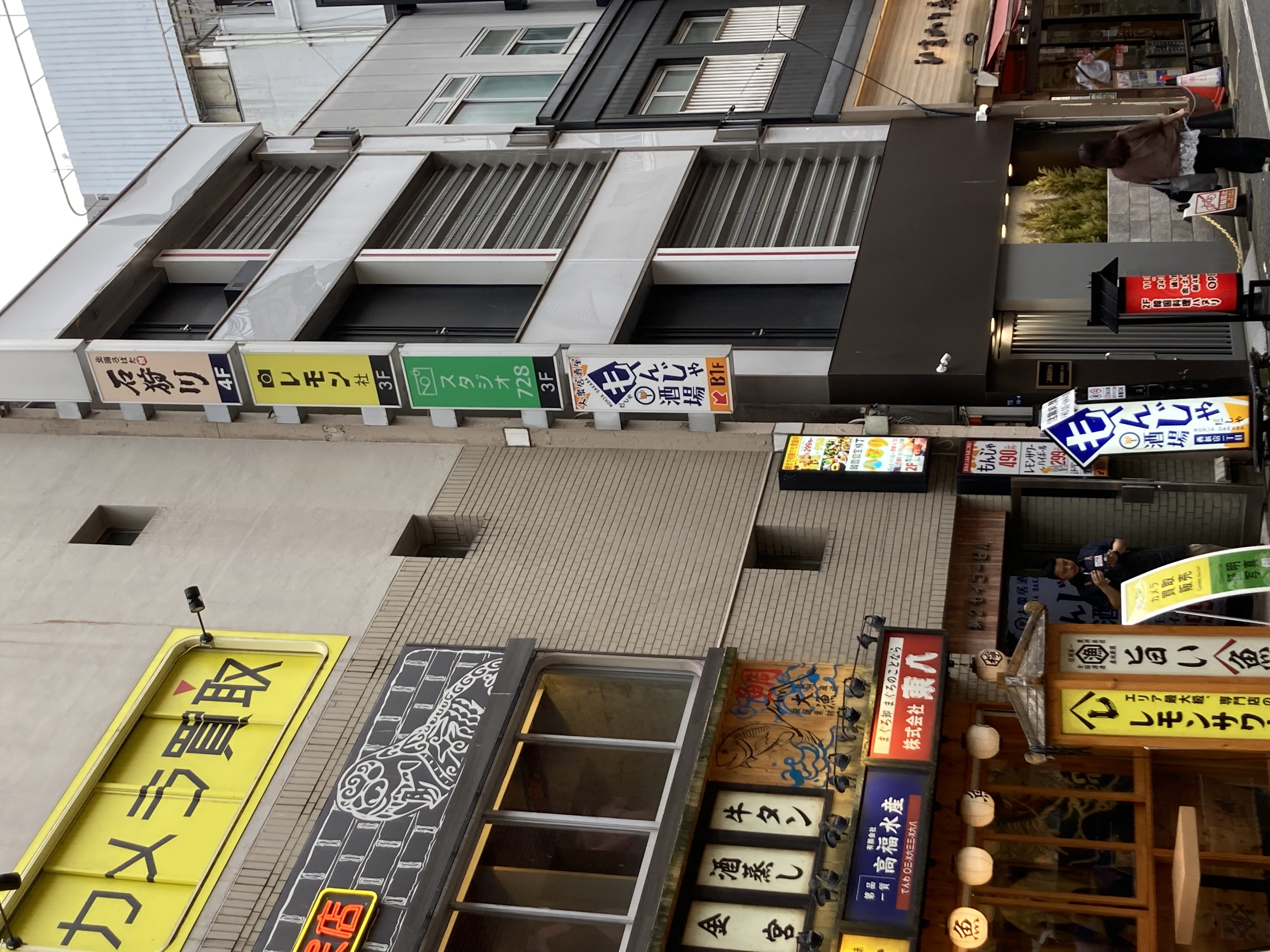
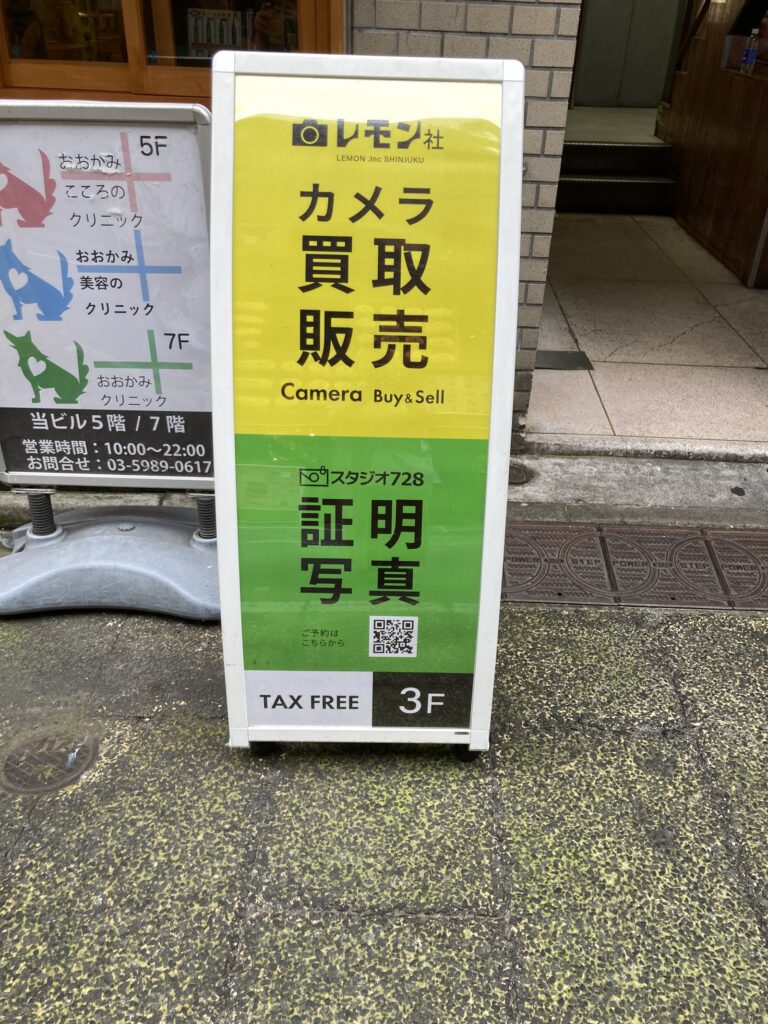
The entrance takes a small dose of courage. It is up a staircase, on the 3rd floor, and from the street it does not look inviting. Walk up anyway. From the street, what you are looking for is the yellow signage on the building — the shop is inside, not at street level.
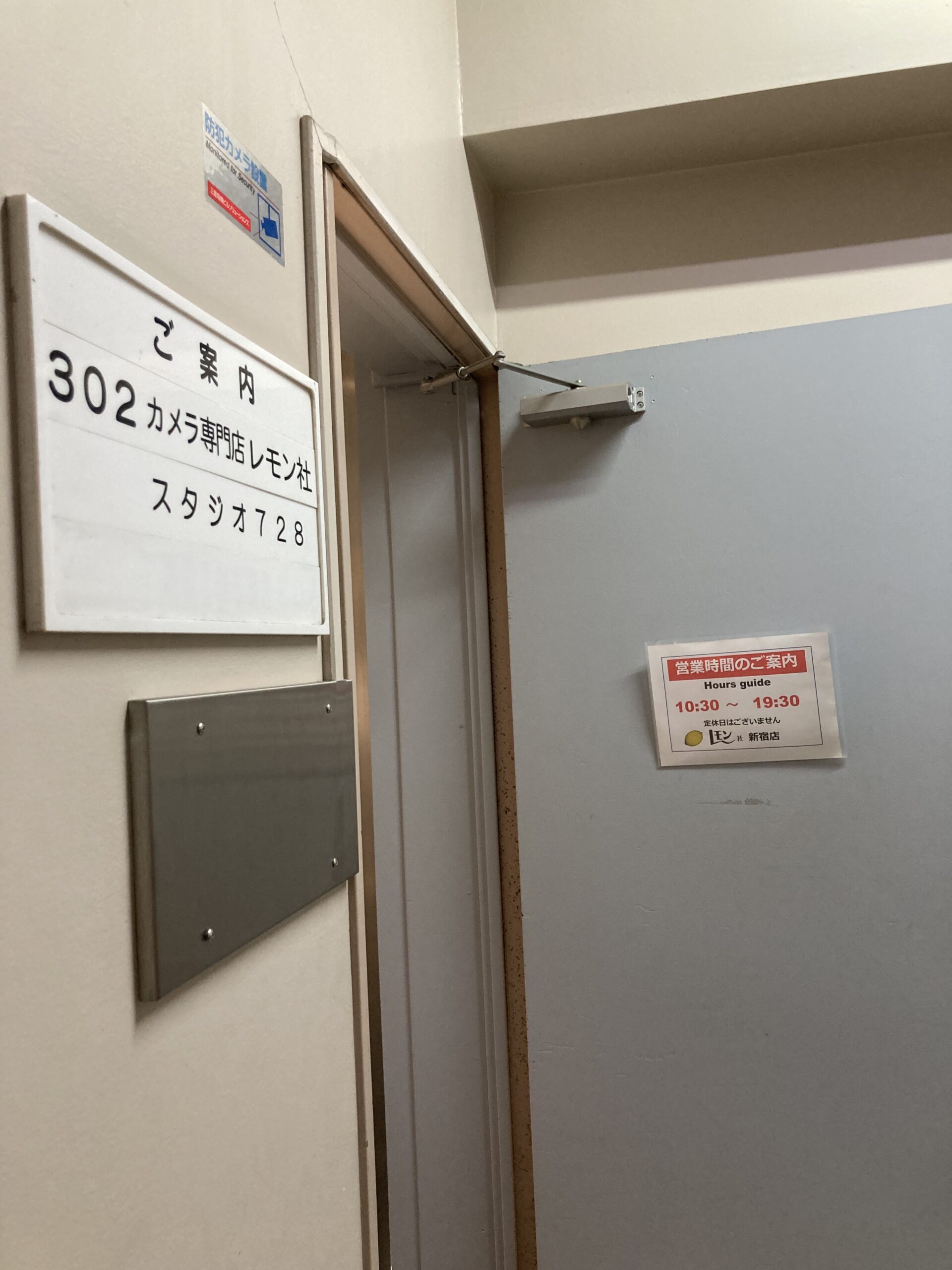
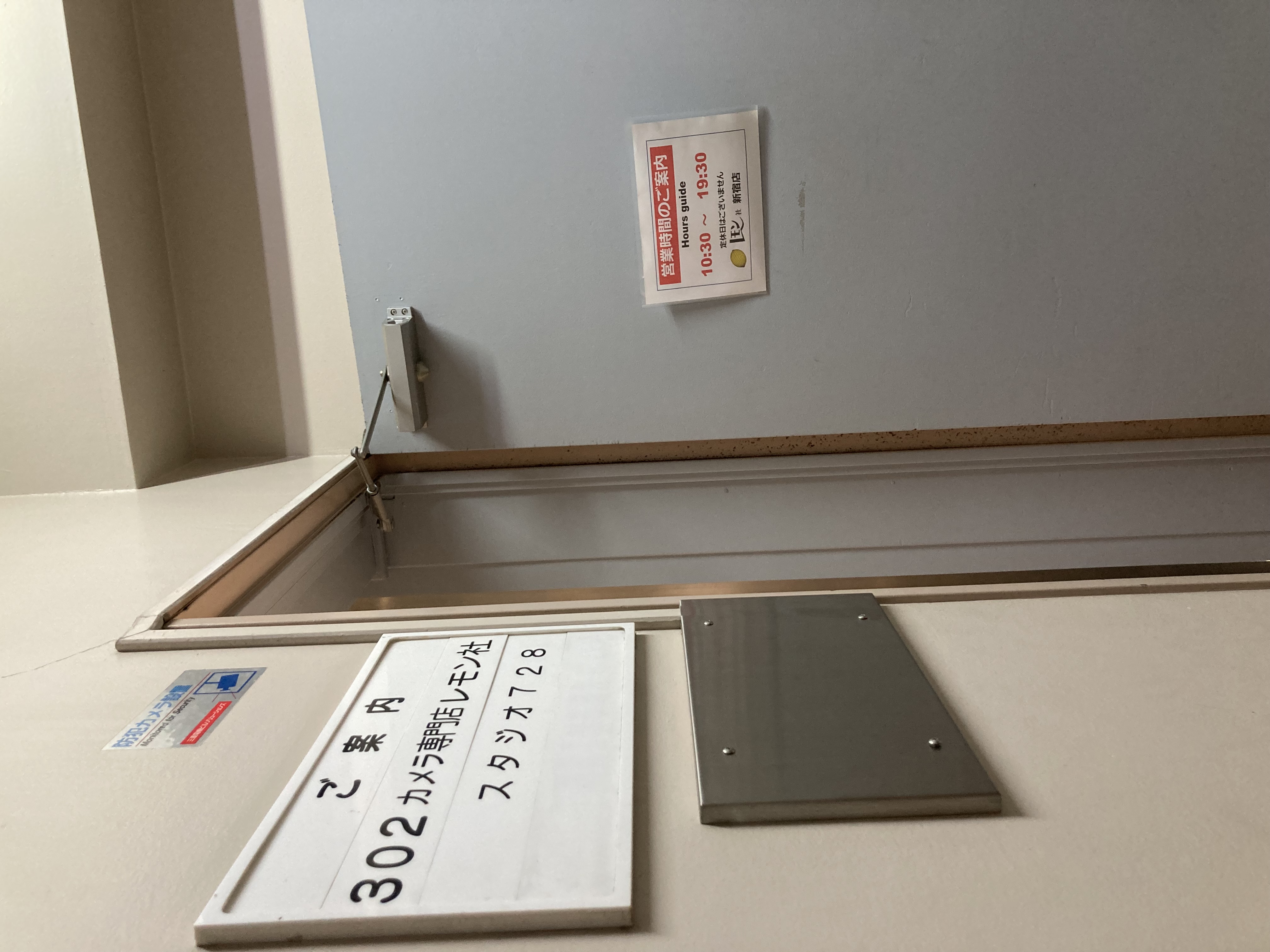
At the entrance there is a board listing what is in the building — “302” for Lemon Company, and Studio 728. And next to it, the thing I want to point out: the opening hours notice. It says 10:30 to 19:30, and that the shop has no regular closing day. What made me stop was that the notice is headed “Hours guide” in English as well as Japanese.
That small English heading is a thing I keep running into in Japanese camera shops, and it is worth naming. Fujiya’s junk annex has an English notice on the door. Map Camera posts its tax-free warning everywhere. Here, it is the opening hours. Nobody is making a fuss about it — the English is just quietly there, for the visitor who needs it.
Please still check the official website before you go. Hours change, and this is what I saw on one day in July 2026.
Inside it is clean and welcoming — almost like a small museum, with photos from the company’s early days near the entrance and a photo studio attached.
Here is why it works as a closing shop. Of the three shops that day, this was the one where I could browse most freely, at my own pace. The staff area is at the back, so while you look at the showcases the staff are out of the way. Nobody approached me. The shop is compact, and because I felt relaxed I ended up walking around it two or three times.
To be very clear, that is only about how the layout made me feel — I have no idea whether anyone was actually watching me anywhere, and no shop did anything wrong.
The junk items sit on open shelves, like bookshelves, and those you can pick up and check with your own hands. The mix is wonderfully random: cameras, lenses, video cameras, chargers, and some objects on the lower shelves where I thought, “what even is this?” Condition ranges from decent to very rough. Use the freedom to touch everything, and inspect carefully.
Tax-Free: yes. Credit cards: yes. English signs: yes.
And the moment that stayed with me from that day happened here. A foreign customer was at the counter talking with a staff member about selling gear, and the staff member was answering in English. Then, when that customer moved to the showcases, another foreign visitor walked up and asked, “Where are you from?” Two strangers from different countries, talking in a Tokyo camera shop, with cameras as the excuse. That is the thing I started this blog to write about.
My full article on Lemon Company is here.
The Last Stop: An Izakaya in Yoyogi
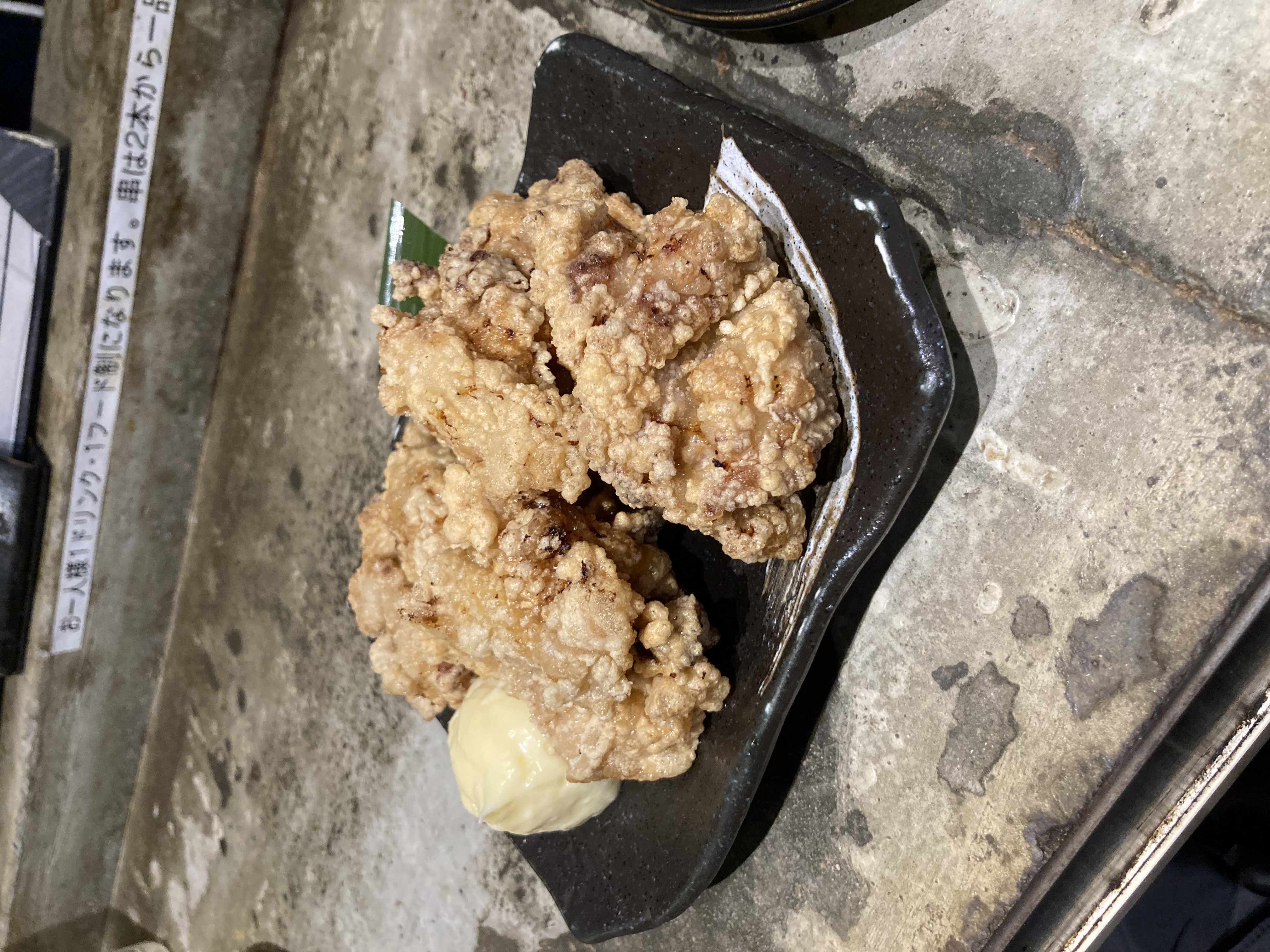
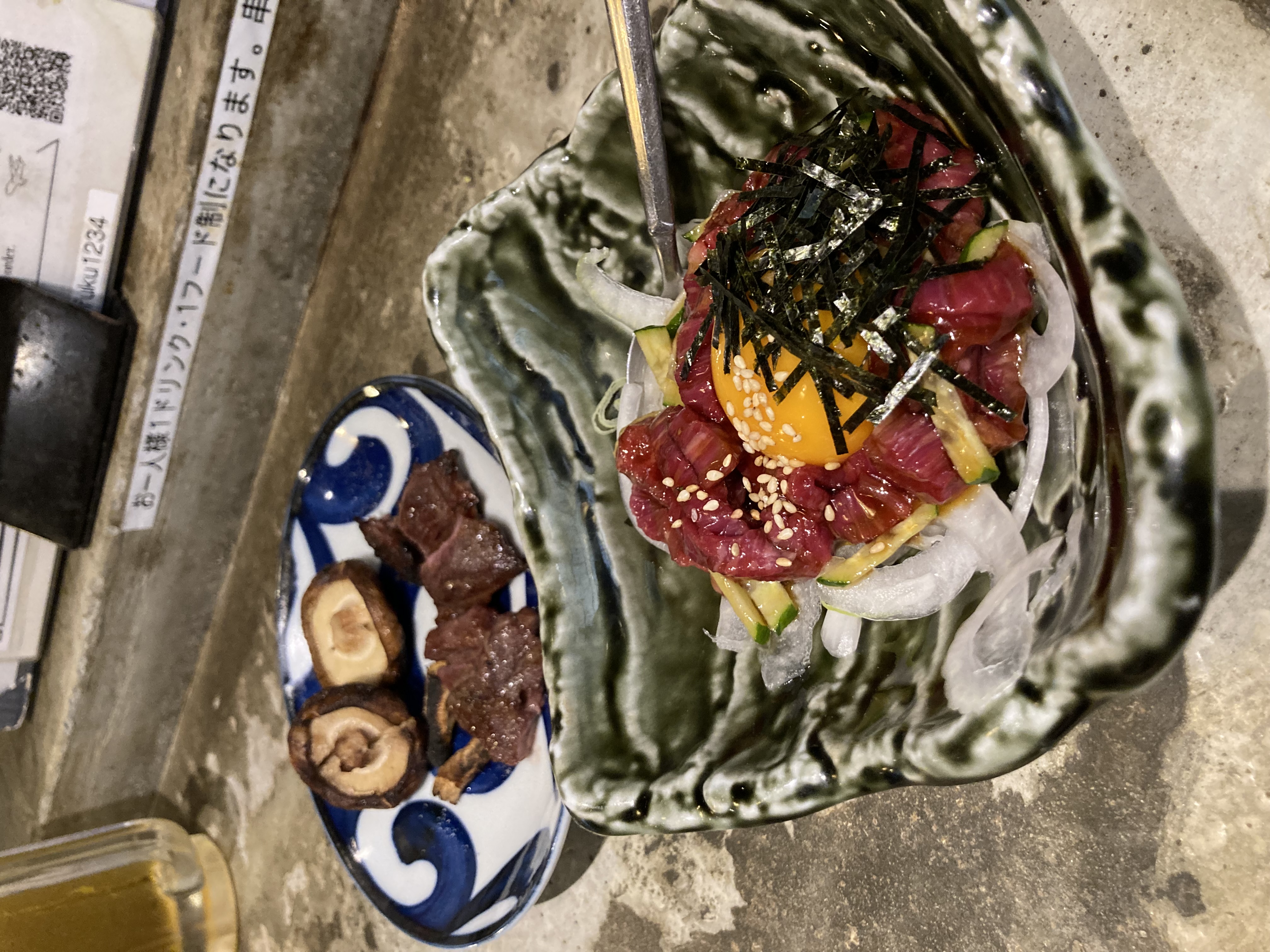
To close the day I went one stop to Yoyogi and had an early dinner at an izakaya called Ufuku (う福). An izakaya is a Japanese pub — you order food and drinks together, in small dishes, over a long sitting.
There was no English menu, and I did not see any other foreign visitors there. It is a local place, not a place set up for people coming from outside Japan. I did not go because it was a recommendation — I went because the day was over and I wanted to sit down.
So this is not a recommendation. It is how my day ended. If you do not read Japanese, a place like this can be difficult, and that is worth knowing before you open the door rather than after. If that sounds like too much at the end of a long day, Shinjuku is two minutes back up the line and full of restaurants with photo menus and English.
What I did was point and order, and the food arrived, and it was good.
Practical Notes
- This is a two-town day, so plan for the train. The JR Chuo Line ride between Nakano and Shinjuku is short, but the transition costs you time and energy. Four shops is a realistic day here. Do not try to force in six.
- Direction matters. I went Nakano first, Shinjuku second, and I would do it that way again. You do the narrow, crowded, physical shopping while you are fresh, and the comfortable, well-signed, air-conditioned shopping when you are tired.
- Carry your passport. Map Camera and Lemon Company clearly show Tax-Free signs. At Fujiya I did not see one, but I saw a foreign customer showing a passport at the register.
- Carry some cash. Cards are widely accepted, but at Fujiya some card brands may not work.
- Shop manners. In most Japanese used camera shops, items are in glass cases. Ask a staff member and they will take the item out for you. Pointing works.
- Check opening hours before you go. They change seasonally and on holidays. Always check each shop’s official website.
- All four shops are within about 5 minutes of a station. You will not get lost.
- One more thing. All of these shops felt a little hard to enter at first — even for me, and I live here. Fujiya’s showcases, Lemon’s staircase. But once you step inside, every one of them is fine. Don’t turn back at the door.
Where to stay. If you are building a camera trip around this route, Shinjuku is the practical base — it is where the train line runs through and where the two big shops are. I have not stayed at any hotel in Shinjuku myself. I live here and go home at night. But you can see what is available in the area here.
This page contains an affiliate link. If you book through it, I may receive a small commission at no extra cost to you.
The Day, Roughly
I cannot give you an exact timetable for this day, so here is the shape of it:
| When | Where |
|---|---|
| Around 11:30 | Nakano — Fujiya Camera, main store (1F and 2F) |
| After that | Fujiya’s junk annex |
| Late morning / early afternoon | Coffee and notes at Renoir, next to Fujiya |
| Around 13:00 | JR Chuo Line to Shinjuku |
| Afternoon | Map Camera |
| After that | Lemon Company |
| Late afternoon | An early dinner in Yoyogi |
If you want the shop-by-shop details rather than the route, my Nakano and Shinjuku shop guide covers all of them.
And if you want the walkable version of this day, Akihabara is the opposite experience: six shops, all within a 10-minute walk, no trains. My one-day Akihabara itinerary is here. Two towns and a train, or one town on foot — pick the day that suits you.
If there is a town or a piece of gear you would like me to look into next, leave a comment. I read them.
コメント