
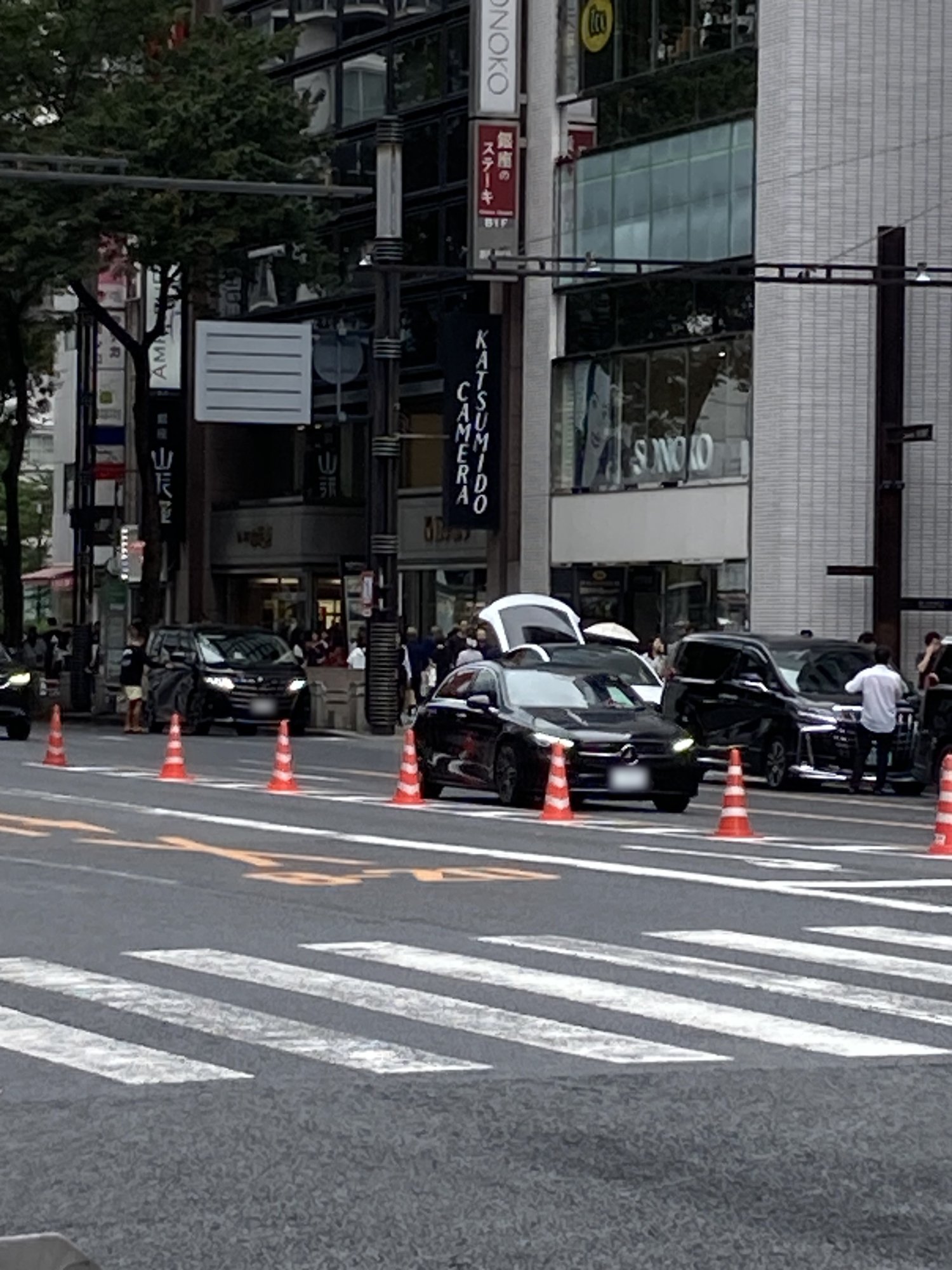
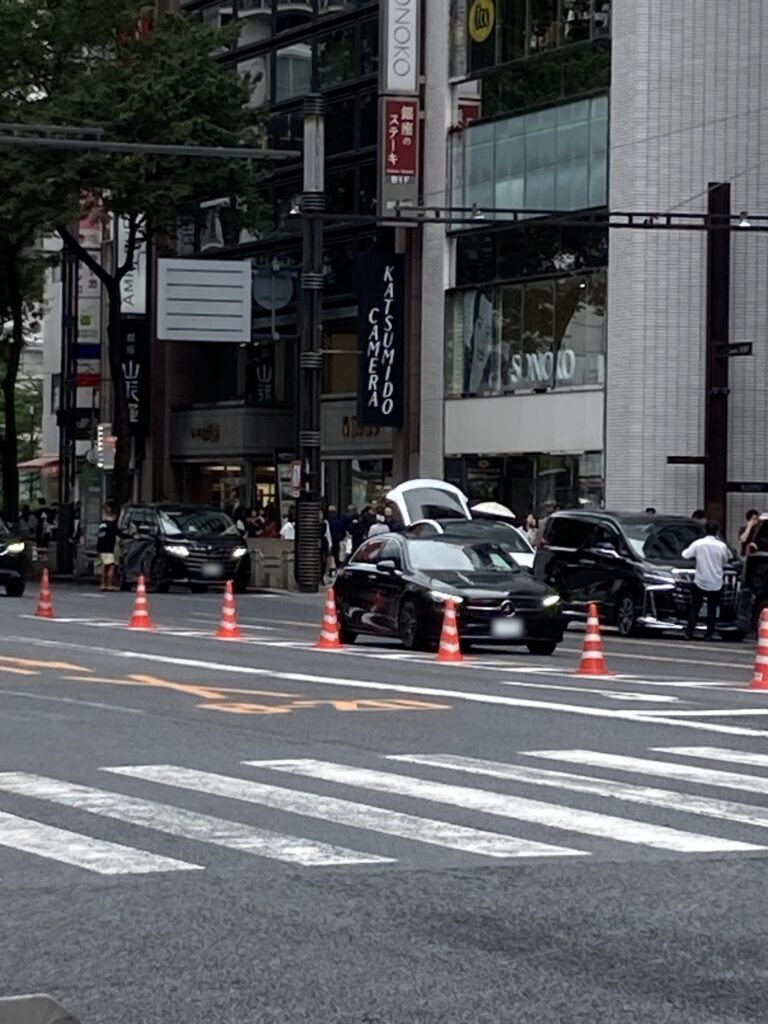
When I was planning my next camera shop walk, Ginza came up as a suggestion. My first thought: are there even camera shops in Ginza? I looked it up. There were — five of them, close enough to walk between in one day.
I have been to Ginza plenty of times, for window shopping and for drinks. I had walked near these shops before. I never saw a single one of them.
On September 12, 2026, I spent a day walking to all five. Each shop has its own article, linked below. This one is about the day as a whole, and about the thought I kept coming back to on the way home: some shops only appear once you start looking for them.
Why I never saw them
Ginza is crowded, and a lot of the crowd is from overseas. I expected sparkling luxury brands, and they are there. But the big stores are not all luxury. Budget fashion brands have huge stores here too. And on the day I went, the main street was closed to cars and turned into a pedestrian zone — in Japanese, hokoten, short for “pedestrian paradise.”
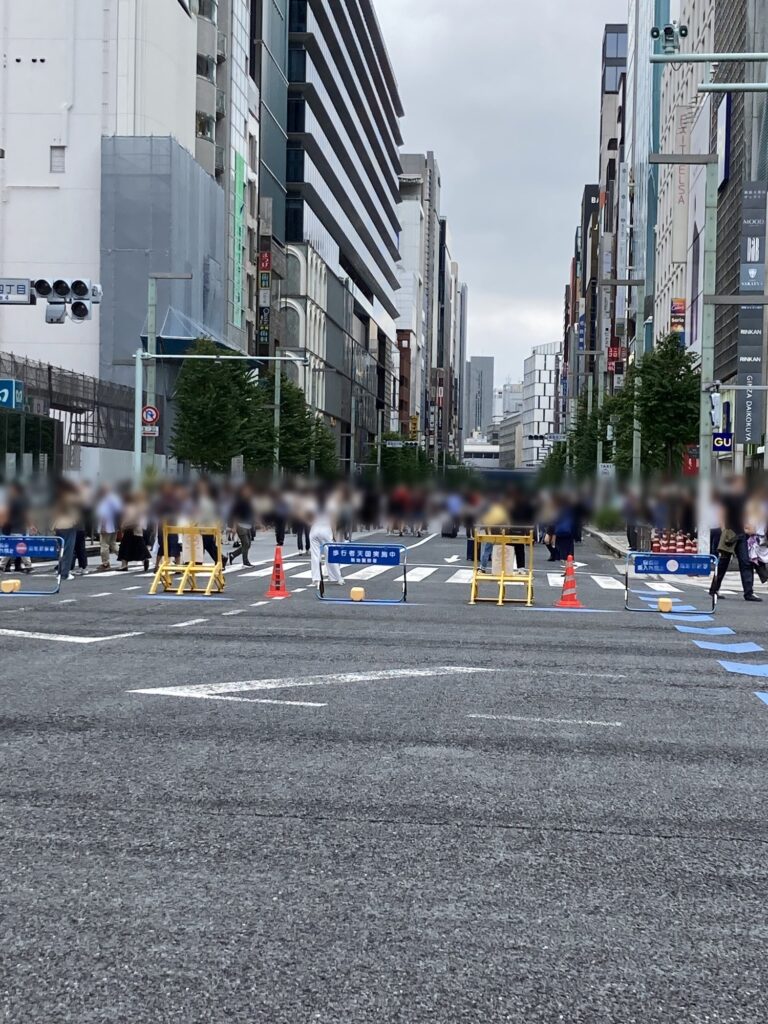
With all of that at street level, your eyes stay at street level. Many of the camera shops I found were old shops sitting behind those big stores: on a side street, on an 8th floor, in one narrow room under a small sign.
They were not hiding. I just was not looking.
The five shops, in the order I walked
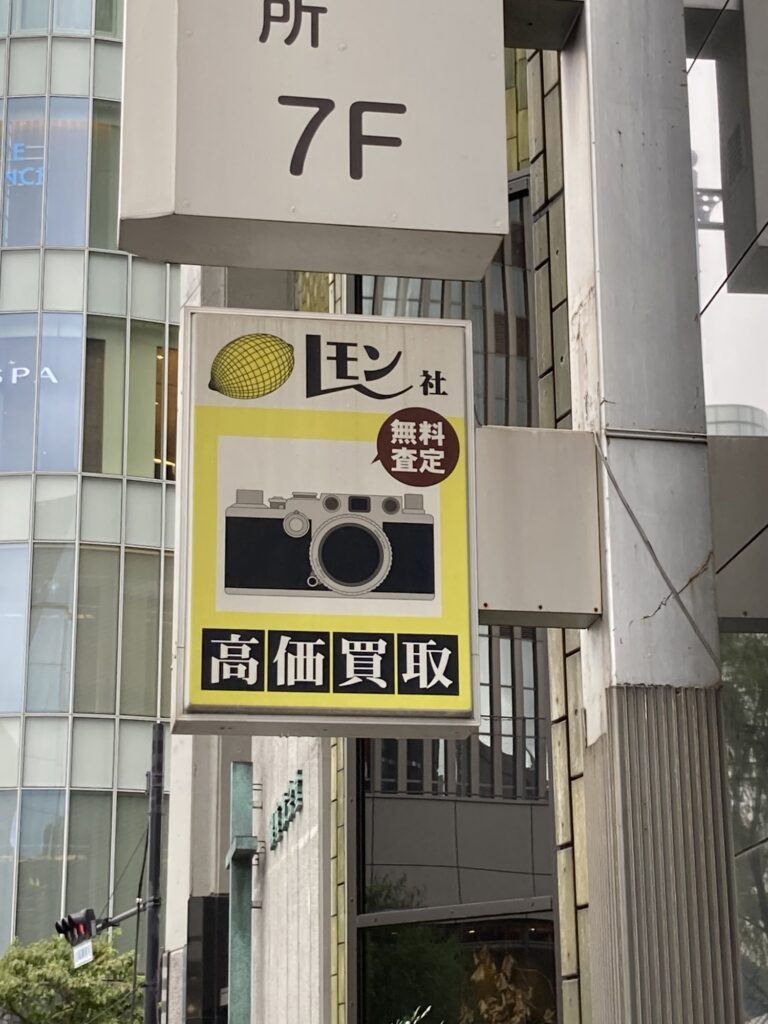
- Lemon Camera Ginza — on the 8th floor of a working church building. The entrance made me hesitate. Upstairs, every customer I saw was from overseas, and a sign said photos were OK inside.
- Shimizu Camera — no website at all. Its big street-facing window does that job, and while I was there, visitors from overseas stood on the sidewalk reading the price tags.
- Sukiya Camera — one narrow room under a small sign that says, in Japanese, “half a century with Leica.” I only got through the door because another customer was already inside.
- Katsumido Camera — one window that runs from a ¥3,080 disposable camera to a ¥1,012,000 Leica M11. Inside, price tags use an old word, 上物, “a fine piece.”
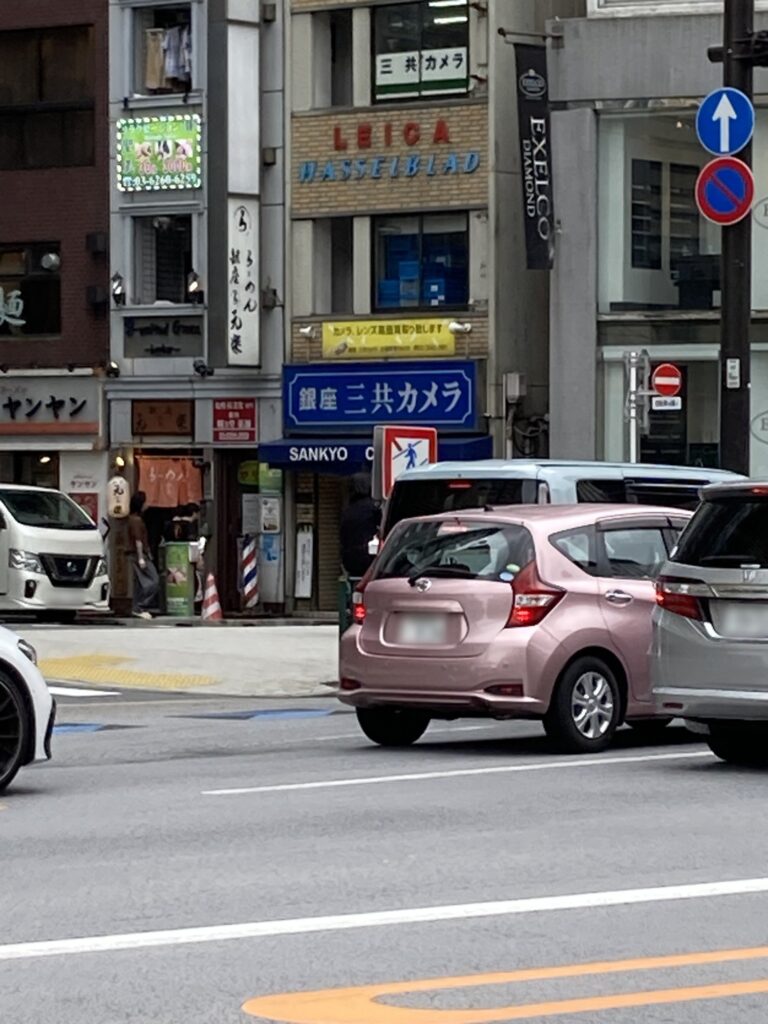
- Sankyo Camera — the one I did not walk into. A staff member and I made eye contact while I was taking photos, and I walked on. My photos later showed a window packed with classic cameras.
A street of windows
Somewhere between the second shop and the fourth, I started to notice a pattern.
Shimizu, and then Katsumido, put cameras in a window facing the street, each with a price tag, for anyone on the sidewalk to look at. Sankyo turned out to have one too, though that one I only found later, in my photos. I did not see this in Akihabara or Shinjuku. There, the stock is inside, and you find out what a shop has by going in.
English, on the other hand, was thin. A Tax-free sticker here. WE BUY CAMERAS on a glass door there. The word “Free” on a handwritten sign. In the four shops I entered, the condition notes on the price tags were in Japanese.
But a camera behind glass with a number next to it does not need translating. From the sidewalk, you can see what a shop sells, what price range it lives in, and whether anything is worth a closer look — all before you touch the door. In Ginza, the windows do much of the work that English signs would do. If you walk slowly and look, they show you where the camera shops are.
The two shops without a window help in their own way. Sukiya’s front is a glass door, so you can see the whole room and how many people are in it before you go in. Lemon has no window at street level, but its yellow sign with a camera on it hangs on the side of the church building — look up.
Akihabara says “welcome.” Ginza does it the old way.
After the walk, I tried to put the difference from Akihabara into one line. Akihabara practically says, “Visitors from abroad? That’s who we’re here for!” Ginza feels old-school.
In Akihabara I saw English guides explaining how to read a price tag, English condition ranks on the tags at Lemon’s Akihabara shop, and a shop with a staff member who speaks English. In Ginza I found very little of that.
And the visitors are there. At Lemon, every customer I saw was from overseas. At Shimizu and Katsumido, people from overseas were inside the shop and standing at the windows. I imagine the shops do think about English. So why so little of it? Maybe it is just hard to do. Maybe it is Edokko pride — the famous stubbornness of old downtown Tokyo people, who do things their own way. I did not ask, and I do not know the real reason. Let’s leave it as my guess, said with a smile.
Junk in Ginza? Yes. And one free box.
If you think junk bins are only an Akihabara thing, Ginza has a surprise for you.
Four of the five shops had junk for sale: Lemon, Shimizu, Sukiya and Katsumido. At Lemon it is a whole corner, with a sign in English, Spanish and Japanese: “Nothing is tested, Nothing is guaranteed.” At Katsumido, an authorized Leica dealer, the junk sits in plastic bins right inside the door, under a sign that says “Junk Camera.” If you have never bought junk before, read my guide to junk cameras in Japan first. “Junk” means nobody promises that it works.
Then came the fifth shop. What sat out in front of Sankyo was not junk for sale. It was a clear plastic box with a handwritten sign: 御自由にどうぞ!! — “please help yourself” — and underneath, “Free.” Two more cases by the staircase next to the shop said the same thing. I did not notice any of them on the day, so I cannot tell you what was inside. But in a neighborhood of million-yen Leicas, the last shop of my day had something out front that cost nothing at all.
The shop I remember most
Lemon. A camera shop above a church still surprises me: floors 1 to 6 are the church, and the cameras are on the 8th floor.
The other thing was the sign that said photos were OK inside. That is rare. In most Japanese camera shops I keep my phone in my pocket, which is why my other Ginza articles mostly show the shops from the outside. At Lemon, I could show you the shelves.
If you want to do all five in one day
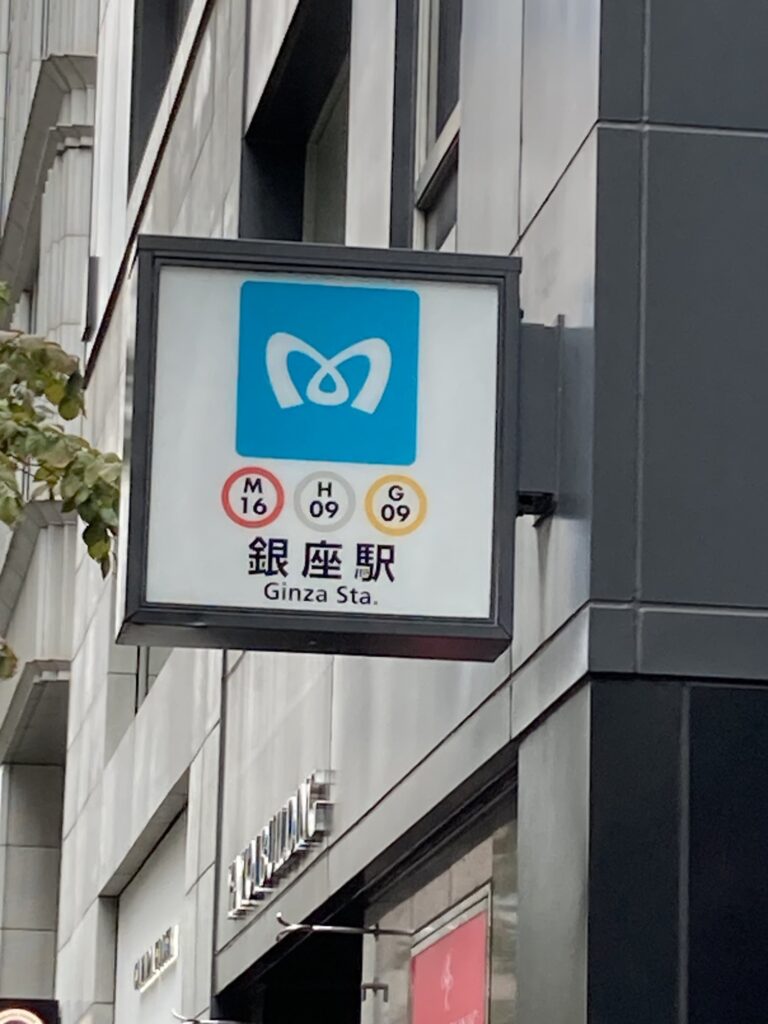
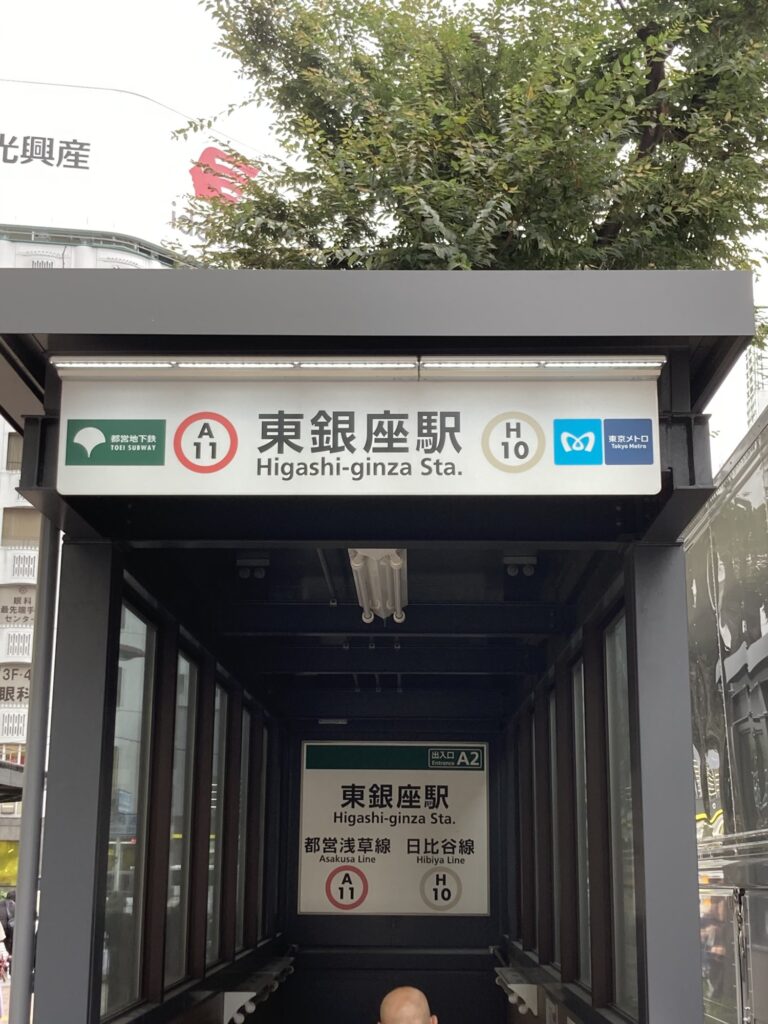
The order I walked works well. Lemon, Shimizu and Sukiya are close together near Ginza Station — Shimizu and Sukiya are on the same block. Katsumido is near the big Ginza 4-chome crossing. Sankyo is a few blocks east, and its closest station is Higashi-Ginza.
Here are the hours, from each shop’s official information where there is any. Where there is none, I say so.
| Shop | Where | Hours |
|---|---|---|
| Lemon Camera Ginza | 4-2-1 Ginza, 8th floor | 10:30–19:30 (official store page, checked September 24, 2026). Closing days are not listed on that page. |
| Shimizu Camera | 4-3-2 Ginza | No official hours published. Open on my Saturday afternoon visit. Web listings say 11:00–20:00, but that is unofficial. |
| Sukiya Camera | 4-3-7 Ginza, ground floor | 11:00–18:00, closed every Monday (card on the building’s tenant board, photographed September 12, 2026). |
| Katsumido Camera | 5-9-1 Ginza, ground floor | 10:00–19:00, open year-round (official website, checked September 17, 2026). |
| Sankyo Camera | 4-10-11 Ginza, ground floor | Monday to Saturday 10:00–18:00, closed Sundays and national holidays (official website, checked September 24, 2026). May close during used camera fairs. |
What the table means for your day:
- Pick a day from Tuesday to Saturday. On Sundays and national holidays, Sankyo is closed. On Mondays, Sukiya is closed. More on this kind of trap in my article on camera shop hours.
- Lemon opens at 10:30 and Sukiya at 11:00, so starting at Lemon around opening time fits my order.
- Sankyo closes first, at 18:00. If you walk in my order, keep an eye on the clock. The reverse also works: Sankyo and Katsumido both open at 10:00, and Lemon stays open until 19:30.
- Sankyo’s website says it may close for a few days during used camera fairs. Check before you go.
- Take your shop-front photos on the way out, not on the way in. I learned that one at Sankyo.
Look at the windows
I had been to Ginza many times and walked right past all of this. The shops were there the whole time, a few steps behind the big stores, with their cameras in the window.
So if you are in Ginza, slow down a little near the side streets and look at the glass. Let the windows show you the way in.
Everything above is what I saw on September 12, 2026, plus the official information I checked afterward. Stock and prices in these windows change fast, so the cameras will be different when you go. This is the last article in my Ginza series. For the rest of the trip — other areas of Tokyo, tax-free shopping, getting cameras home — start with my Japan camera shopping guide.
コメント