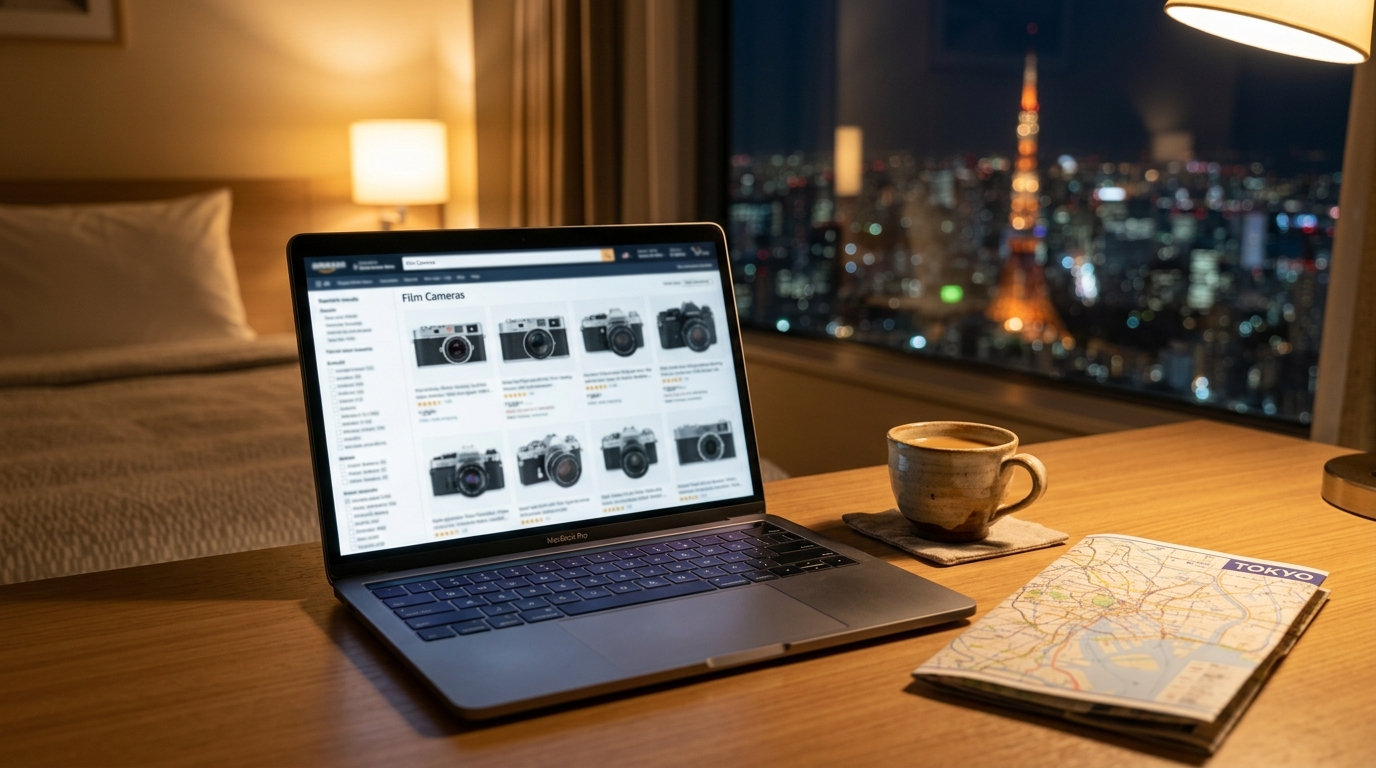
Let’s say you already know what you want. Not “an old film camera” — a specific one. A Nikon FM2, black, working meter. The question is not whether Tokyo has one. Tokyo almost certainly has several. The question is: which shop has one this week, and can you find out before you get on a train?
Here is the thing that makes this different from normal shopping. Every used camera in Japan is a one-of-a-kind item. A shop does not “stock” the FM2 the way a shop stocks a new lens — it has this particular FM2, with this particular meter and these particular scratches, and when it sells, there is no restock button. So “the shop that has FM2s” does not really exist. There is only “the shop that has one today.”
The good news: for the biggest shops, you can check today’s shelves from your hotel room, or from your sofa on another continent. For the small shops, you cannot — and that has an upside too. This article is about both halves.
The big shops publish their used stock online
The three big names I have written about on this site all run websites where the used inventory is listed item by item. I opened all three sites on August 24, 2026, and what follows is what I saw that day. Websites change, so treat this as a snapshot.
Map Camera (Shinjuku)
At mapcamera.com, the top page has a keyword search box and a “new used arrivals” section that is updated daily — when I looked, there was a tab for each of the past several days, so you can literally browse what came in yesterday. The site is in Japanese, with a built-in translation selector in the header. There is also an ENGLISH button, but it leads to an English store guide — floor map, tax-free information, worldwide shipping, FAQ — not an English version of the stock search. So the guide pages speak your language; the search itself does not.
The physical store is the six-floor building near Shinjuku Station that I covered in my Map Camera write-up.
Kitamura
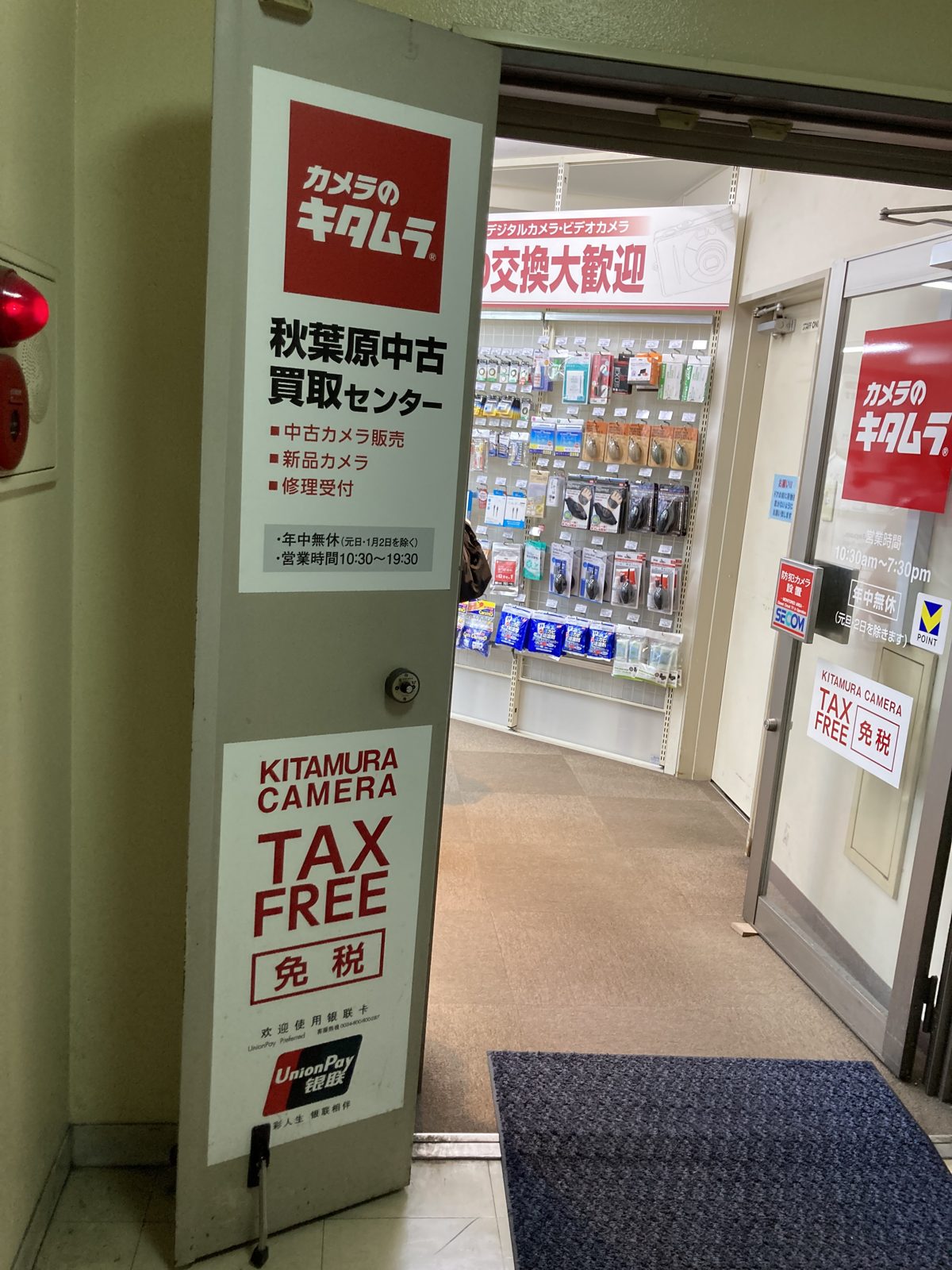
Kitamura’s used stock lives on its main shopping site, shop.kitamura.jp, under the 中古品 (used) tab. I typed “Nikon FM2” into the search box — in plain Latin letters — and the site immediately offered suggestions. The results can be filtered to used only, and this is where it gets genuinely useful: the model page lists every individual body separately, each with its own condition grade (AB for good, B for average, and so on), its own remarks, and its own management number.
Two more things I saw on the item page. First, it names the physical branch that currently holds that exact camera — the FM2 I clicked on was sitting in a store in Nagano Prefecture. Second, the site explains that you can have an item sent to a Kitamura branch near you, inspect the actual camera at the counter, and decline it there if it is not what you hoped (the site notes you may pay the transfer fee in that case). For a buyer who wants to see before paying, that is a remarkable system. The catch: the site is in Japanese, with no English version that I could find. The Akihabara branch I visited is covered in my Kitamura article.
Fujiya Camera (Nakano)
At fujiya-camera.co.jp I searched “New FM2”, again in Latin letters. The results came back as individual used items, each carrying its own condition grade (AB-, in the case I saw). The top page also has a newly-arrived-used section. Like Kitamura, the site is Japanese only — no language switcher that I could find. The shop itself, and its junk annex across the street in Nakano, are in my Fujiya Camera article.
One practical note that covers all three: the search boxes accept model names as you would type them at home — “FM2” is “FM2” in any language. What comes back in Japanese is mostly the condition wording. The grading systems behind those letters are explained in my guide to Japanese condition grades, and between that and a translation tool, the listings are very readable.
Small shops: the showcase is the inventory
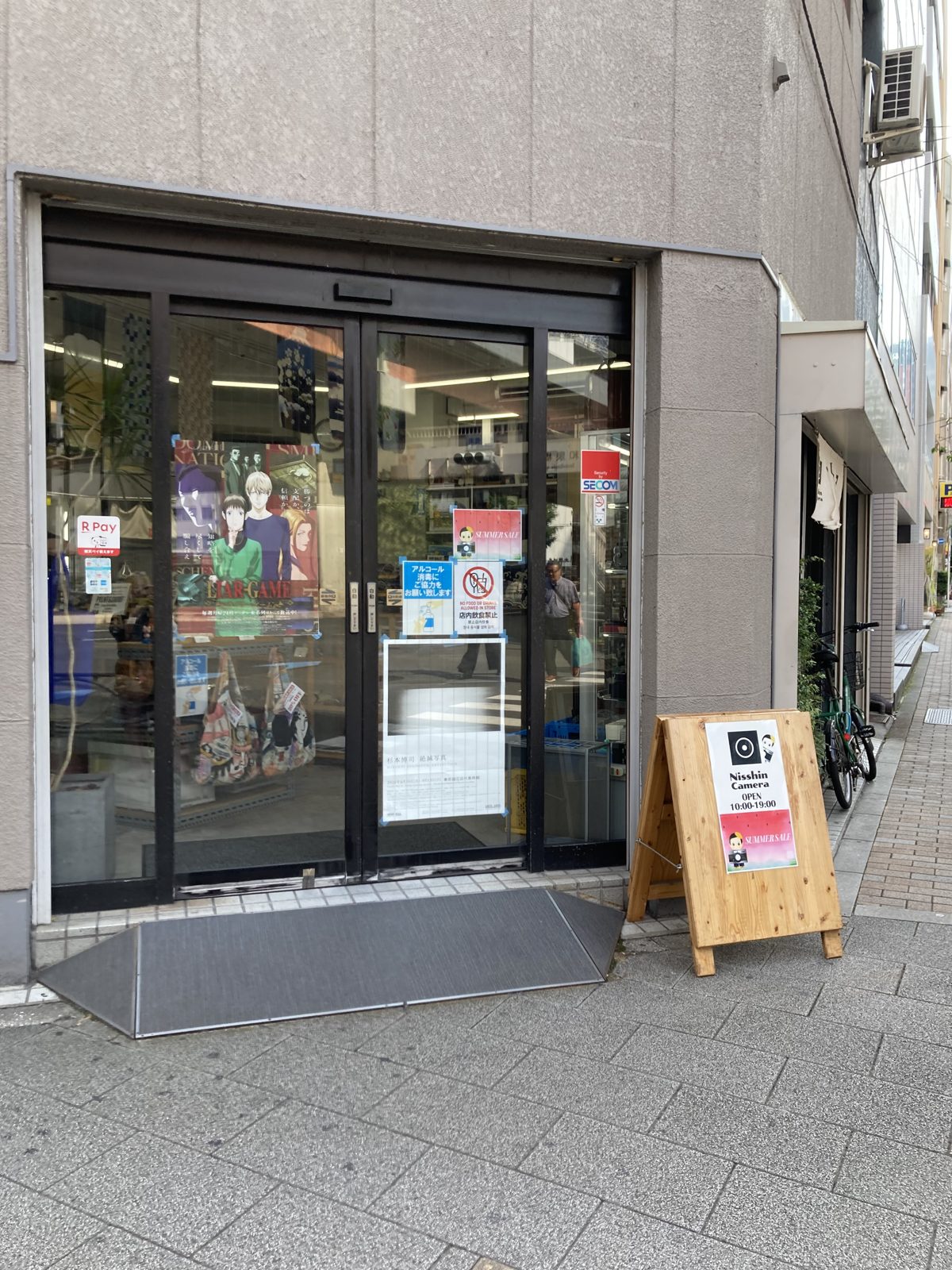
Now the other half of Tokyo. At a small shop like Nisshin Camera in Akihabara, the stock sits in glass showcases, and the showcases are the inventory system. At Tokyo CAMERA’s self-service Junk Garage, items carry a price sticker and nothing else — no condition note, no database, no list you can consult from abroad. If you want to know what is on those shelves today, you stand in front of them.
Before you write those shops off, consider what that means. A camera listed on a big shop’s website is visible to every collector on the planet with a search box. A camera in a small showcase in Akihabara is visible to the people who walked past it that day. The un-searchable shelf is exactly where the surprises survive — which is much of the fun, and I wrote about that side of it in buying junk cameras in Japan.
In the shop, asking beats browsing
Once you are physically in Tokyo, the fastest search engine is the person behind the counter. Shop staff know their own showcases better than any website. The whole phrase you need is:
“[model name] wa arimasu ka?” — Do you have a [model name]?
Say “Nikon FM2 wa arimasu ka?” and you will be understood, even in a shop with no English signage at all. If the answer is no, you have spent thirty seconds and can walk to the next shop with a clear conscience. I collected this phrase and the handful of others you actually need in how to ask for things in Japanese camera shops.
If the search comes up empty today
Check again tomorrow. This is not a consolation line — it is how the market works. Map Camera’s used page is updated every day, Fujiya has its newly-arrived list, Kitamura’s units come and go branch by branch, and the small shops rotate stock with no announcement at all. A model that shows zero results on Monday can show three on Thursday.
And keep one part of your plan flexible. In a one-of-a-kind market, the camera you came for is a target, not a promise — but the shelf next to it is full of cameras you did not know you wanted. Some of my favorite finds started as a search for something else entirely.
コメント