
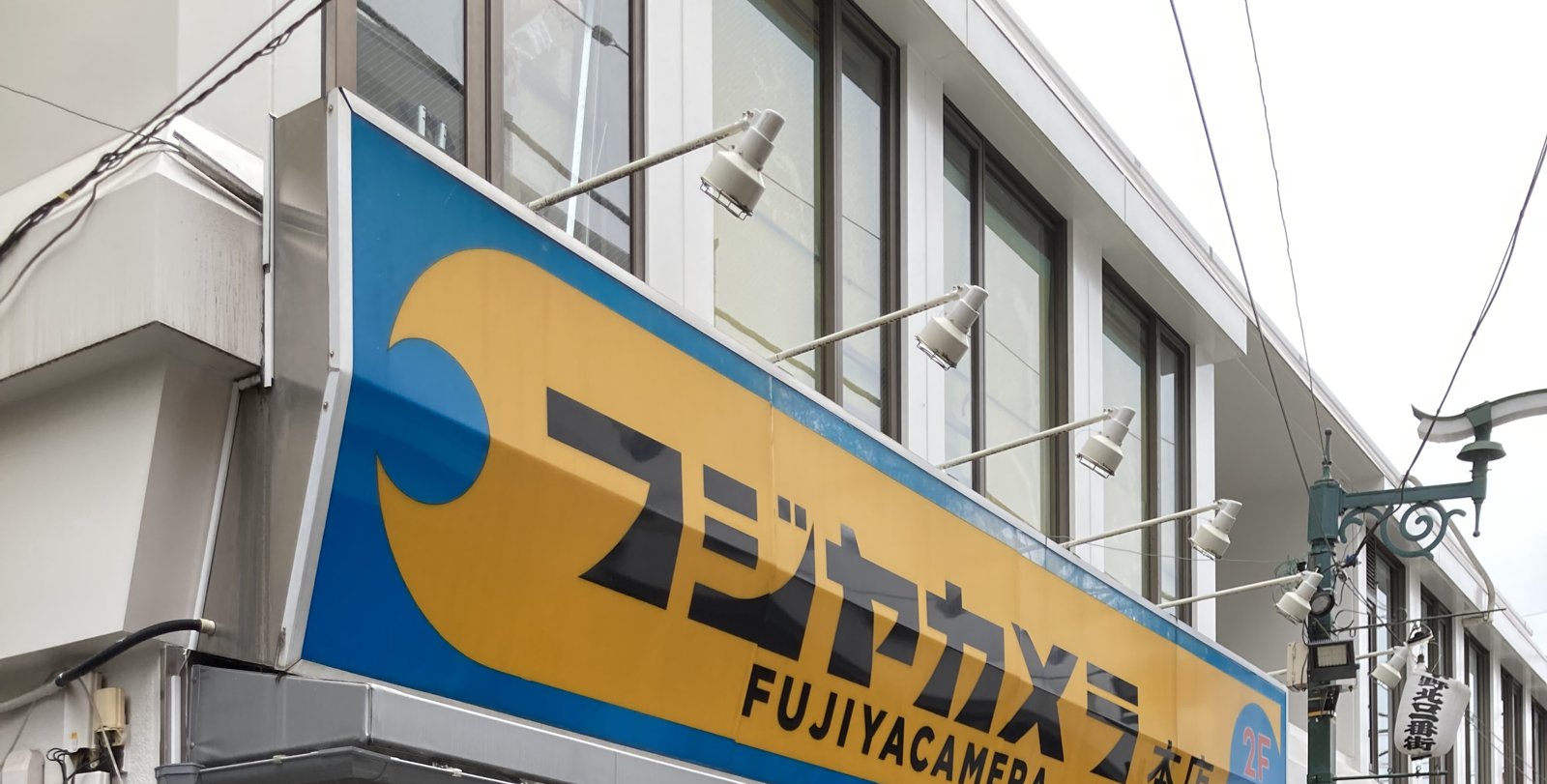
In my Tokyo camera shop walk (Nakano & Shinjuku), I introduced three shops in one article. Today I want to go deeper into just one of them: Fujiya Camera in Nakano — and especially its small “junk” annex, which I think deserves its own article.
Here is my honest opinion after visiting: even if you are not planning to buy an expensive camera in Japan, Fujiya’s junk annex is worth your time. Why? Because it is full of genuine Japanese accessories — the small Nikon and Canon items that are surprisingly hard to find back home.

Quick recap: what is Fujiya Camera?
Fujiya is a famous used-camera shop about 5 minutes on foot from Nakano Station’s North Exit (one or two stops from Shinjuku on the JR Chuo Line). I covered the basics in the walk article, so here is the short version:
- The shop is not huge, but it is packed with gear in glass showcases.
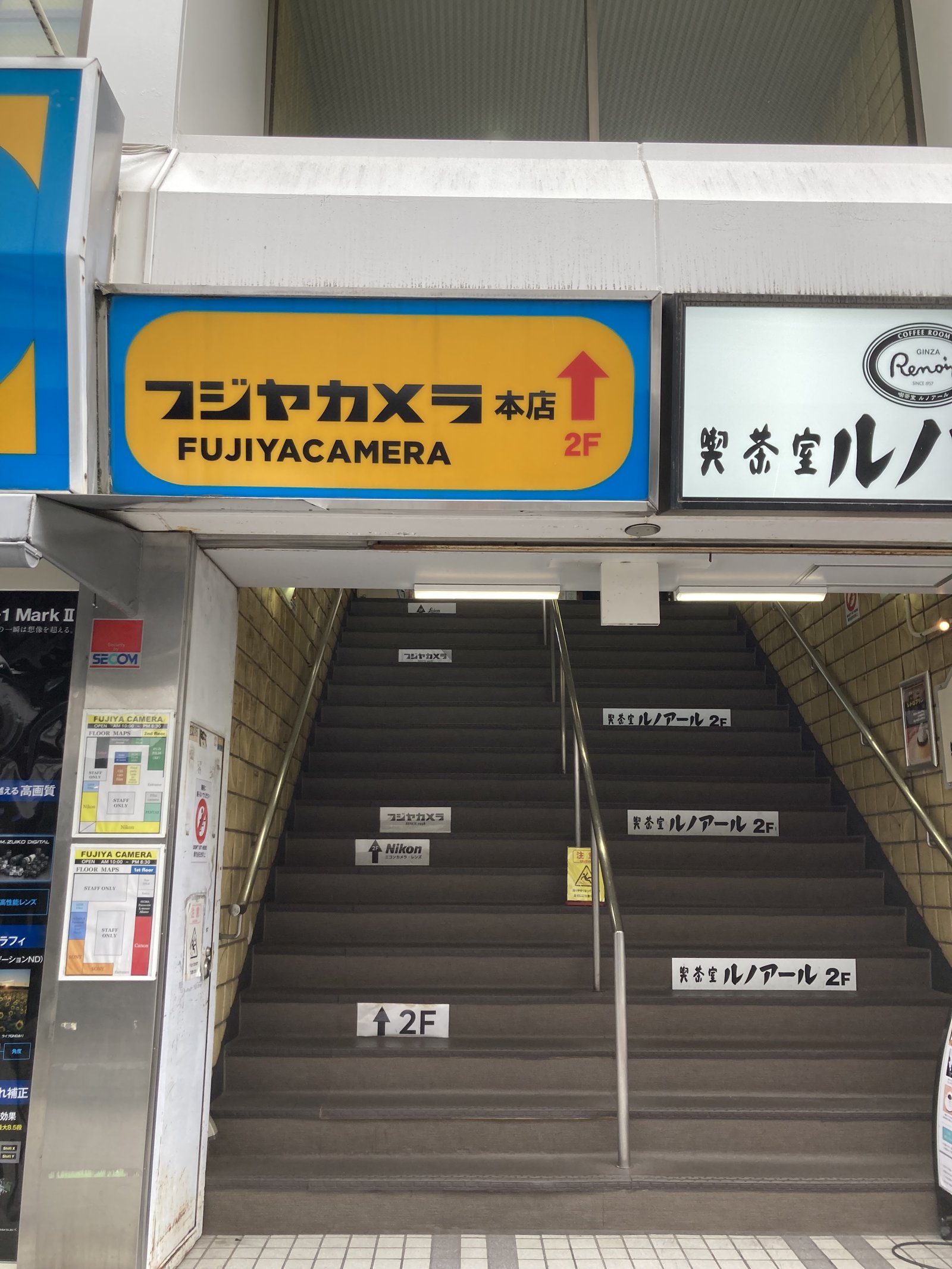
- There are sales floors on both the 1st and 2nd floor, with separate entrances. The 1st floor is mostly Canon; Nikon and Leica are on the 2nd floor. Don’t leave after seeing only one floor — I almost did.
- Inside the shop I did not see English signs. But good news: at the stairs to the 2nd floor there are English floor maps (“FLOOR MAPS”, with opening hours) showing which brands are on which floor — check them first. And the junk annex has an English notice at its entrance, too (more on that below).
- Staff: I saw seven or eight staff members on my visit, and they all looked busy. If you want to see an item in a showcase, just catch someone’s attention and point — that works fine even without Japanese.
- I also saw other foreign visitors in the shop, so you will not be the only one.
About tax-free shopping and credit cards: I honestly don’t have confirmed information. From what I saw on my visit, some things may depend on the situation — if it matters to you, please ask at the register. And please check the official website for current opening hours before you go; these things change.
The junk annex: the real reason for this article
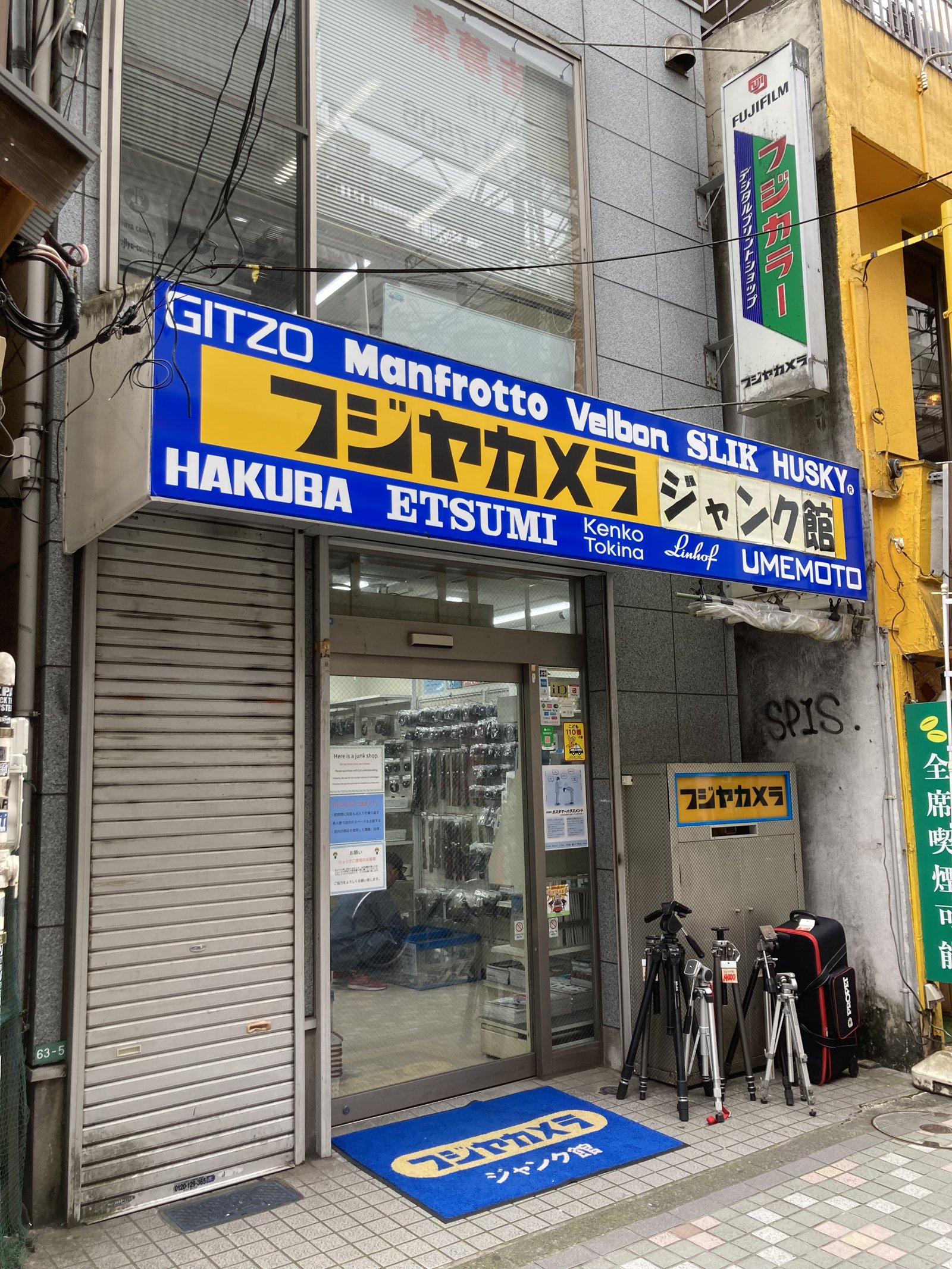
Fujiya’s junk annex is a small separate building. “Junk” in Japanese camera shops means untested or as-is items, sold cheap and without guarantees. Many visitors think of junk corners as places to gamble on old camera bodies and lenses. At Fujiya, I could see cameras and lenses sitting loose in plastic boxes. To be honest with you: on my visit the annex was crowded, other customers were around those boxes, and I could not get close enough to pick the cameras and lenses up myself. So for those, I can only tell you what I saw — not how they felt in hand.
But here is what surprised me most: the accessories.
Genuine accessories everywhere
The accessories were a different story — those I could actually pick up and check. Right when I walked in, the first thing I saw was a shelf of soft lens cases — Nikon ones among them, and in surprisingly clean condition when I handled them. And as I looked around, I kept finding more:
- Genuine Nikon and Canon straps
- Genuine lens caps and lens hoods
- Soft cases for lenses, many in nice condition
- Japanese camera magazines and books for enthusiasts
- Even original instruction manuals
Think about it from a visitor’s point of view. If you own a classic Nikon or Canon at home, finding a genuine strap, the correct metal hood, or an original cap for it can be a real hunt in your country. In Japan, these little genuine parts simply flow through the used market every day. A shelf like this is normal here. That is exactly why it is special for you.
My suggestion: even if a high-end camera is not in your budget, come here to hunt for accessories and parts. A genuine strap or hood is small, light, cheap to carry home, and it upgrades a camera you already own. To me, that is one of the smartest souvenirs a camera lover can bring back from Tokyo.
How is this different from Lemon Company’s junk corner?
In my walk article I mentioned that at Lemon Company in Shinjuku, junk items sit on open shelves — like bookshelves — and you can freely pick them up and check them. So what makes Fujiya’s annex different?
- Lemon Company: you can pick items up freely, which is great. But honestly, many of the junk items I saw there were in rough condition.
- Fujiya’s annex: a small, tight space with narrow aisles. The cameras and lenses sit in plastic boxes (I could only look at those from a distance on my crowded visit). But the accessories I did pick up and check — cases, straps, caps — were mostly in good condition. That difference surprised me.
They are two different experiences, and this is just what I saw on one day at each shop. But if genuine accessories in decent condition are what you are after, Fujiya’s annex is the one that impressed me.
Practical tips for the annex
- It is small and narrow. When it gets crowded, it is hard to see the shelves. If you can, go when it is quiet.
- Leave big bags on the rack. There is a rack in the middle of the shop for large bags — the notice is handwritten, in Japanese, but the rule is simple: don’t browse with a backpack on. Put it on the rack.
- There is English at the door. The glass door has a notice in English: “Here is a junk shop. Please purchase with full understanding” — along with a note that items cannot be returned or exchanged. I was glad to see this: it means the shop expects foreign visitors like you. Inside, the signs are in Japanese, but you don’t really need them for browsing boxes — just be ready to point and gesture at the register.
- Junk means junk. Untested, as-is, no guarantees. For accessories like straps and caps this is low risk — you can see the condition with your own eyes. For camera bodies and lenses, know what you are gambling on.
Wrapping up
Fujiya Camera’s main store is a classic Nakano experience: two floors of showcases and serious local camera culture. But for many visitors, I think the little junk annex next door might be the real highlight — a plastic-box treasure hunt where genuine Nikon and Canon accessories, the kind that are hard to find outside Japan, are just sitting there waiting for you.
Everything in this article is what I saw with my own eyes on my visit in July 2026. Opening hours and shop rules can change, so please check Fujiya’s official website before you go. And if you dig up a great find in the annex, I would love to hear about it.

コメント